How the Ladies Auxiliary Changed Black American Labor
Pullman Porters kept coming up in my research about Black women’s labor.
I knew of them. I even made it a point to bring the twins through the Pullman Sleeping Car trains at the California Railroad Museum a few months ago. I took copious pictures during our visit because Pullman Porters kept coming up.
Railroads have more than one symbolic meaning for African Americans. This month especially, we tend to focus our attention on the Underground Railroad, with invisible tracks memorized in the minds of conductors like Harriet Tubman. While the “Moses of her people” is often credited with freeing 300 people across 19 trips, her military leadership in the Combahee River Raid actually saw the liberation of over 700 enslaved individuals in a single night.
But that wasn’t our only track.
The Southern Pacific Railroad brought many African Americans west, anchoring a new reality at 7th and Broadway in Oakland. Pullman Porters and maids helped craft a Black middle class out of the descendants of the enslaved, but let’s not mistake opportunity for altruism. George Pullman’s decision to hire Black labor exclusively wasn’t a “progressive” move; it was a calculated capitalist play based on the embedded racial hierarchy of our nation.
As Larry Tye breaks down in Rising from the Rails, George Pullman’s insistence on Black staff was rooted in social separation. Porters were meant to be intimate enough to serve in close quarters—adjusting pillows and handling luggage—but socially distant enough to “inhabit a different reality.” White passengers needed the comfort of knowing they would never encounter these men or women outside the “closed capsule” of the sleeping car. Black labor has always been essential in America, and it was always intended to be isolated, controlled, and tucked away West of Adelaide Street.
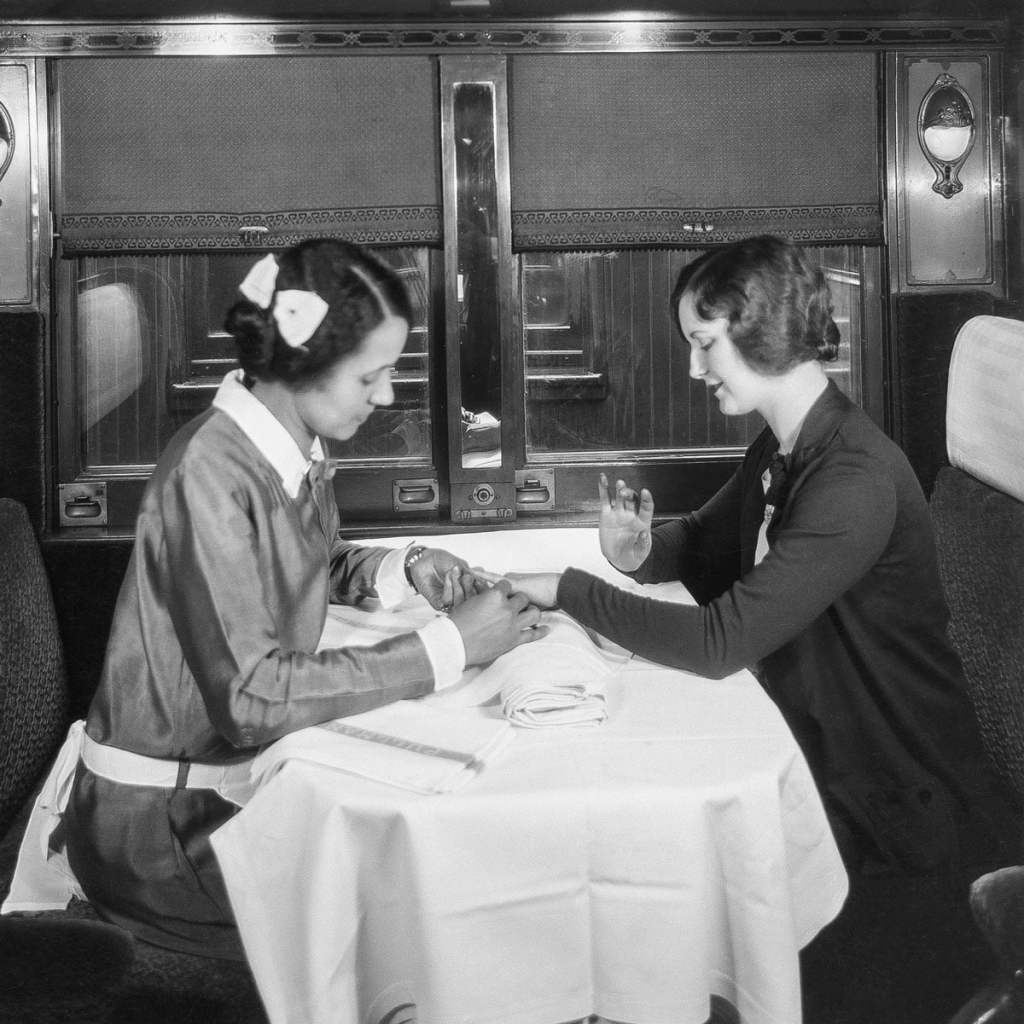
While male Porters are well-documented in photography, there is a significant absence of archival images of Pullman Maids. This historical silence begs the question: if the archive didn’t want to see them, how did they see themselves?
The answer: As the strategic backbone of the movement.
This is evidenced by the way women organized themselves and the men around them. In her oral history, the legendary Frances Albrier—a powerhouse club woman and visionary—noted that while many Porters initially feared retaliation for organizing, the women were ready to move.
When Local 456 received its charter from the National AFL for “railroad cooks, waiters, and miscellaneous help,” it became more than a railroad union—it became a community loophole.
Here’s the tea: Albrier shares an anecdote about a Black woman who applied for a cook position at Kahn’s Department Store (the crown jewel of Oakland retail at 16th and Broadway). The manager tried to hit her with the “company line,” saying he’d love to hire her, but she had to belong to a union. At the time, white unions flatly denied Black women membership as “cooks or chefs.” They thought they had her locked out.
But they forgot about the “miscellaneous” in Local 456.
Because Local 456 admitted Black women, this sister was able to walk back into Kahn’s with a union card in her hand. They used a railroad charter to break the color line in a department store. That is the Myth & Marrow of our history: using the very structures meant to isolate us to build bridges they never saw coming.
This history isn’t just a collection of dates and names—it’s a blueprint for how we navigate the systems meant to contain us today. The “tea” in the archive is only useful if it’s poured into our current movements.
Here is how you can move with me:
1. Stay in the Conductor’s Cabin
Don’t let the algorithm keep you from the truth. Connect with MetaCocoMom for your daily dose of forgotten history and sharp commentary on Black motherhood and feminism.
- Website: metacocomom.com
- Instagram: @metacocomom
- TikTok: @therealmetacocomom
- Podcast: Dispatches from the Conductor’s Cabin
- Newsletter: Subscribe to AFROXpress
2. Disrupt the Silence
The archive relies on our silence to stay buried. If this history shifted your perspective, share this blog with one other person. Word-of-mouth is how we’ve always built our networks; let’s keep that energy alive.
3. Witness the Vigilance (Albany, NY)
To my folks in the Capital District: Archival history is a call-and-response. Here is YOUR call: Join us for VIGILANCE—an immersive Underground Railroad experience—at the Underground Railroad Education Center.
- When: April 25, 2026
- Where: Albany, NY
- Tickets: Get your tickets for VIGILANCE
4. Build the Future with Me
Labor Pains and Myth & Marrow are more than research projects—they are a communal effort to map our healing and reclaim our labor. If you are ready to move from observer to collaborator, I invite you to join me in this work.
- Join the Work: Accept the Invitation
- Follow the Project: @laborpainsproject


Leave a comment