In modern America, we have stopped calling filmmakers “directors” and started calling them “storytellers.” And the stories have changed.
If you look at the recent Golden Era of television—shows like the recent Netflix hit His and Hers—you’ll notice the genre has flipped on its head. Once upon a time, it was very clear who the villain was and who the protagonist was. You knew who to root for.
But in the last decade, we have embraced the unreliable narrator. We are seeing stories told from multiple vantage points, where the “truth” shifts depending on who is holding the camera. We are finally seeing the layers of human complexity.
Public History needs to undergo this same transformation.
Right now, Public History is still stuck in the “Old Hollywood” phase. It frames points of view that perpetuate a specific American Mythology—one that supports Capitalism and White Supremacy. It tells a single, linear story, usually from the perspective of a white male, using “standard” methodological tools.
We have done a great job incorporating hard sciences into history, but a terrible job incorporating the arts.
Enter: The Labor Pains Project.
After a year of deep diving into archives in Albany and Oakland, it has become blatantly clear to me: I don’t just have a heart for history; I have a heart for the presentation of history. Because how it is presented determines who gets to be human.
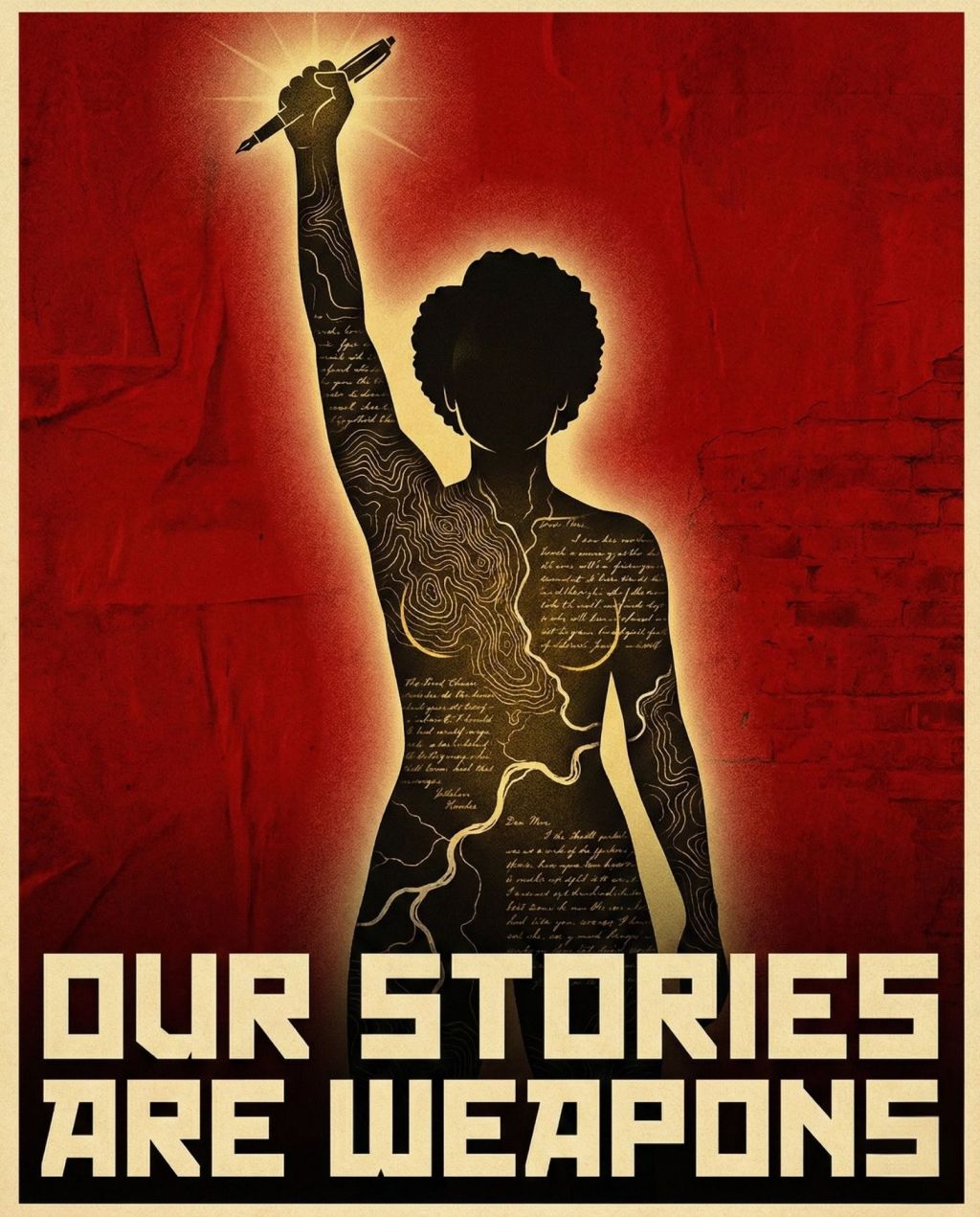
I am developing a methodology that uses Body Mapping as a tool for historical interpretation.
In her essay Venus in Two Acts, Saidiya Hartman coins the term “Critical Fabrication.” It is the act of taking what is known in the historical record and doing something creative, artistic, and imaginative to fill the silences.
Take Harriet Myers, for example. We know her husband, Stephen Myers. He is the face of the Underground Railroad in Albany. But Harriet? When you Google her, she only appears alongside him.
We know she ran the Myers residence while Stephen was working as a butler in Saratoga. We know she handled the finances, reported to abolitionists, and ensured Freedom Seekers were safe. But in the archives? There is almost nothing. There is a single letter she wrote to an abolitionist in New York (a copy sits at the Underground Railroad Education Center).
That’s it. One letter. How do I tell her story with just one letter?
I use the body.
I am looking at a specific moment in 1852—the moment she wrote that letter—and I am critically fabricating a body map for her. I am using art to interpret the silence. I am doing the same for Harriet Tubman, Ruth Beckford, and Frances Albrier.
This is not just about the past. This is about the now.
Eesha Pandit explains, in her essay, ‘The Current That Carries Us’, that the Bush Administration used funding restrictions (the global gag rule) to push an anti-abortion agenda. Today, we see a similar anti-diversity agenda using federal funding to pressure the Arts community into promoting a specific “American Mythology.”
My forgiveness is political, and so is my art.
I have stopped calling Labor Pains a performance art piece. This is an Afrofuturist Ritual.
I am hosting this ritual on two coasts (Albany and Oakland) to combat the attempt to eradicate the labor of Black American women. I am using the very tools the government seeks to conquer—art, story, embodiment—to fan the flames of revolution against a fascist state.
I want you to join me. As Pandit writes, “movements are rivers”, but they need energy and momentum to flow.
God’s gon’ trouble da water. Get in.


Leave a comment