By Jae Gayle | Labor Pains Project Update
In the Labor Pains project, we aren’t just collecting stories; we are mapping a genealogy of survival. As I dive deeper into the archival research—moving between the Phyllis Wheatley Club records in Oakland and the Empire State Women’s Club history in Albany—a clear narrative arc has begun to emerge.
Labor is not static. For Black women in America, the definition of “work” has shifted from the physical extraction of the body to the cognitive exhaustion of the mind.
To ground our upcoming Narrative Literature Review, the living Exhibit, and the performance script Myth & Marrow, I have categorized this evolution into five distinct historical periods. These eras trace how we moved from stolen labor to the invisible, internal labor of today.
1. 1775–1865: Stolen Labor (The Operational Era)
The Focus: Reproductive exploitation and clandestine resistance.
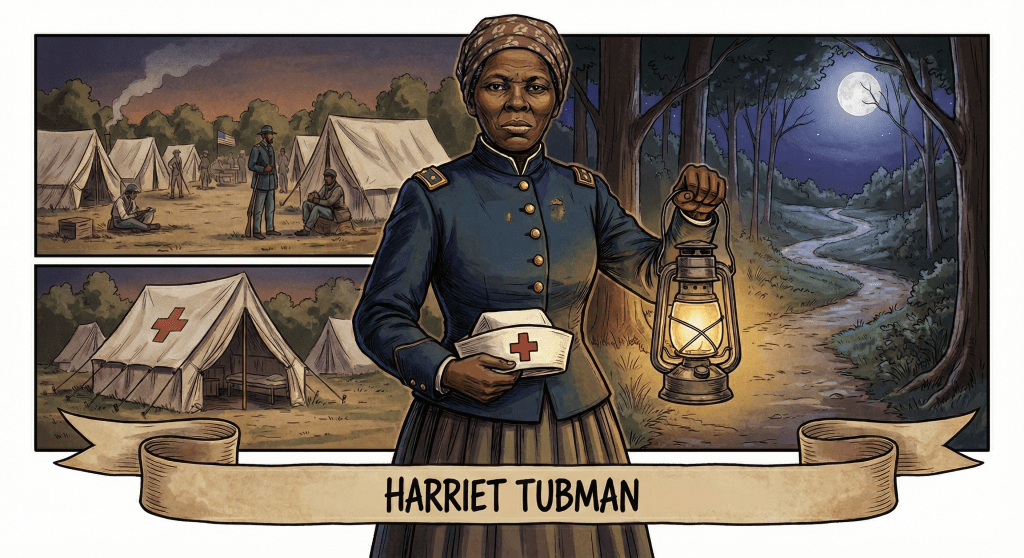
In this era, labor was theft. But within that theft, Black women developed high-level operational skills. We are reframing figures like Harriet Tubman here. We are moving away from the “mythical savior” trope and looking at her as a tactical laborer. Her work involved complex logistics, navigation, intelligence gathering, and resource management. This wasn’t just magic; it was a military operation of liberation carried out by a skilled worker.
2. 1865–1910: Undervalued Labor (The Multifaceted Era)
The Focus: Domestic service, laundry, and the institutionalization of care.
Post-Emancipation, Black women bore the double burden of wage work (often in white homes) and family care. But this era also birthed our collective power. We look at the 1881 Atlanta Washerwomen Strike as a blueprint for labor organizing.
Crucially, this is where our Albany and Oakland connections shine. During this period, Black women began to institutionalize the care economy. Through the founding of organizations like the Mother’s Charity Club (Oakland) and the Empire State Women’s Club (NY), Black women took the “domestic” skills society devalued and used them to build community infrastructure, schools, and safety nets.
3. 1910–1964: Industrial Labor (The Public Era)
The Focus: claiming citizenship through presence in hostile spaces.
This era marks the shift from the private home to the public sector. Black women entered shipyards, streetcars, and factories. The labor here was not just the physical job, but the psychological labor of occupying public space that didn’t want us there. We examine figures like Frances Albrier (welder and union organizer) and Maya Angelou (streetcar conductor), illustrating how simply showing up to work was a form of radical resistance.
4. 1965–1980: Cultural Labor (The Community Era)
The Focus: Somatic practices and the body politic.
Here, labor expands to include cultural production and community survival. We look at the Black Panthers’ feeding programs not just as charity, but as essential labor sustaining the community. We also explore the work of Ruth Beckford in Oakland. Her Afro-Haitian dance instruction wasn’t just “art”—it was somatic labor that reframed identity and cared for the Black female body in a time of political upheaval.
5. 1981–Present: Cognitive Labor (The Internal Era)
The Focus: The “Concrete Ceiling” and the deficit of care.
In our current era, the labor has moved inside. We are no longer just fighting for entry; we are fighting for psychological survival. Black women today face the “concrete ceiling”—a barrier far denser and more opaque than the glass ceiling.
This era is defined by invisible labor: code-switching, navigating microaggressions, and managing emotional taxes in corporate and academic institutions. We situate the advocacy work of Albany’s Dr. Alice Green here, examining how modern advocacy requires an intense cognitive load. This is the era where we confront the deficit of care and the sheer exhaustion of internal management.
Why This Framework Matters
This timeline isn’t just for a history book. It is the backbone of presenting the historical data and stories from the Labor Pains archive. When you see Myth & Marrow or walk through the exhibit, you will be walking through these shifts—witnessing how the hands designated for domestic work became the hands that welded ships, led military campaigns, and eventually, became the minds now navigating the complexities of modern economic survival.
Stay tuned as we begin to populate these eras with the oral histories we are currently collecting.


Leave a comment