Erasure, Economics, and Why the State Still Owes Harriet Tubman
I admit, I love A Charlie Brown Thanksgiving. I like eating. I like having days off from work.
I do not like the myth of Thanksgiving.
I do not want to give into the consumerism now associated with the end of the harvest season. It feels disrespectful and insulting. We do not respect the land, its life forms, or each other with the honor that life deserves.
So in an effort to learn, I took my children to the California State Museum. We explored the First Peoples in this region of the country.
The meta-cognitive part of my brain is always curious about how history is presented in museum settings. It matters to me. I care because I know that poorly presented history can do everything from, perpetuate harmful concepts, to warp perception of reality.
The American narrative is riddled with harmful myths. We see this in disturbingly different perceptions of America. As we approach 250 years after the Declaration of Independence we must ask ourselves, can we afford to cling to these myths, particularly those around Black women?
Harriet Tubman: A NY Case Study
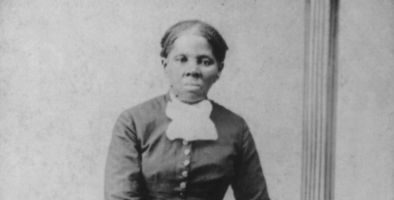
Harriet Tubman’s legacy has always been a battleground. In recent years, that battle has played out in high-profile arenas: on the face of our currency, on federal websites, and in the halls of Congress. But while the headlines focus on whether Tubman’s face should grace the $20 bill, a much deeper, more uncomfortable question remains:
Why are we so eager to put a Black woman on money that the American economy refused to pay her?
At Labor Pains, we trace the scars of Black women’s labor. When we look at Harriet Tubman, we don’t just see a hero; we see a case study in Stratification Economics. We see a woman who generated immense value for this nation but was systematically blocked from receiving it. From the 1908 opening of her Home for the Aged to the bureaucratic erasures of 2025, the story remains the same: The State extracts the labor, but refuses the care.
The “Myth”: A Symbol Without Substance
In 2016, the Obama administration announced that Harriet Tubman would replace Andrew Jackson on the $20 bill. It was hailed as a landmark recognition of Black women’s leadership. But symbols in America are fragile things.
By 2019, Treasury Secretary Steven Mnuchin told Congress that the redesign would be delayed until at least 2028, citing “technical issues” and security features. However, transcripts of his testimony reveal a different story. Mnuchin admitted that putting Tubman on the bill was“not a priority”, a delay the Southern Poverty Law Center argued was undergirded by racism and misogyny.
Fast forward to 2025, and the erasure became digital. The National Park Service’s “What is the Underground Railroad” webpage was edited to strip away Tubman’s portrait and her quotes. While the NPS later claimed these were “unauthorized edits” and restored the content, the pattern is undeniable.
These aren’t just bureaucratic glitches. In the framework of Stratification Economics, these are “Legitimizing Myths.” They are tactical moves to sanitize history. If the State minimizes Tubman’s role—reducing her to a passive symbol or removing her from the narrative—it avoids having to reckon with the actual debt it owes her.
The “Rig”: Why the Economy Failed Harriet
Traditional economics tells us the market is colorblind—that if you work hard, you get paid. Harriet Tubman’s life proves that the market isn’t broken; it is rigged.
During the Civil War, Tubman wasn’t just a “helper.” She was an armed scout, a spy, and the first woman to lead an armed assault in the Civil War (the Combahee River Raid). In terms of labor, she performed the duties of a General. Yet, for decades, the federal government refused to pay her for that labor.
This is what economists call a “Noncompeting Group.” In this system, Whiteness and Maleness are treated as “property”—assets that guarantee higher payment. By refusing to compensate Tubman for her military leadership, the system ensured that a Black woman could not extract the same wealth from the government that a White man could, even if she did the work of a commander.
The proof is in the National Archives. Although Tubman began petitioning for a pension in 1896, she was initially only granted $8 a month—and only because she was the widow of a veteran, not because of her own service. When supporters introduced H.R. 4982 in 1897 to secure a pension of $25 a month befitting her actual service, the system pushed back.
Despite testimonies from military commanders confirming her leadership in the field, the Senate Committee on Pensions, led by Mr. Shoup, refused the request. In their 1899 report, they argued that Tubman could not be paid higher than white nurses, whose pensions were capped at $12 a month. The Senate effectively ignored her espionage and military command, choosing to compensate her only for “womanly” nursing work. They deliberately devalued her labor to keep the racial and gendered hierarchy intact.
The “Marrow”: The Subsidy of Care
So, what happens when the State refuses to care for its laborers? Black women step in to subsidize the system.
This brings us to New York State. New York loves to style itself as an anti-racist bastion, a “free state” north of the Mason-Dixon. But this is a sanitized fiction. This is the same state where Sojourner Truth appears in the Northeast Slave Records Index at least four times, cataloged as property to be sold and purchased.
And it is the state where, in 1908, Harriet Tubman had to do what the government would not. That year, Tubman officially opened the Harriet Tubman Home for the Aged in Auburn, NY. She had purchased the land in 1896, and by 1908, she institutionalized the care of the “marrow”—the indigent, the sick, and the formerly enslaved elderly who had been discarded by the economy.
Tubman was not alone. 1908 was also the year the Empire State Federation of Women’s Clubs was founded. These Black women’s clubs mobilized to uplift the work of Black women and girls and, crucially, to support Harriet Tubman and her Home.
This was a subsidy. By building that home and organizing those clubs, Tubman and the women of the Empire State Federation paid for the social safety net out of their own pockets. They took care of citizens that the State of New York and the Federal Government had thrown away. They allowed American capitalism to function without paying for the “maintenance costs” of its Black workers.
The Fight for the Marrow
The delay of the $20 bill and the scrubbing of the NPS website are violent acts because they attempt to hide this reality. They want the “Myth”—the silent, strong image of Tubman—without the “Marrow”—the reality that she died in poverty while subsidizing the state.
The Labor Pains Project refuses the Myth. We stand with the legacy of the Empire State Federation and the women of Oakland who organized when the factories locked them out.
Harriet Tubman doesn’t just belong on a $20 bill. She belongs in the ledger of American debt. Until we move from symbolic representation to structural reparation—until we fund the “Care Economy” that Black women have been running for free since 1619—the image of Tubman on our currency will remain what it is today: a promissory note that America refuses to cash.
For more on the Labor Pains Project and our work in Albany and Oakland, visit LaborPainsProject.com.


Leave a comment