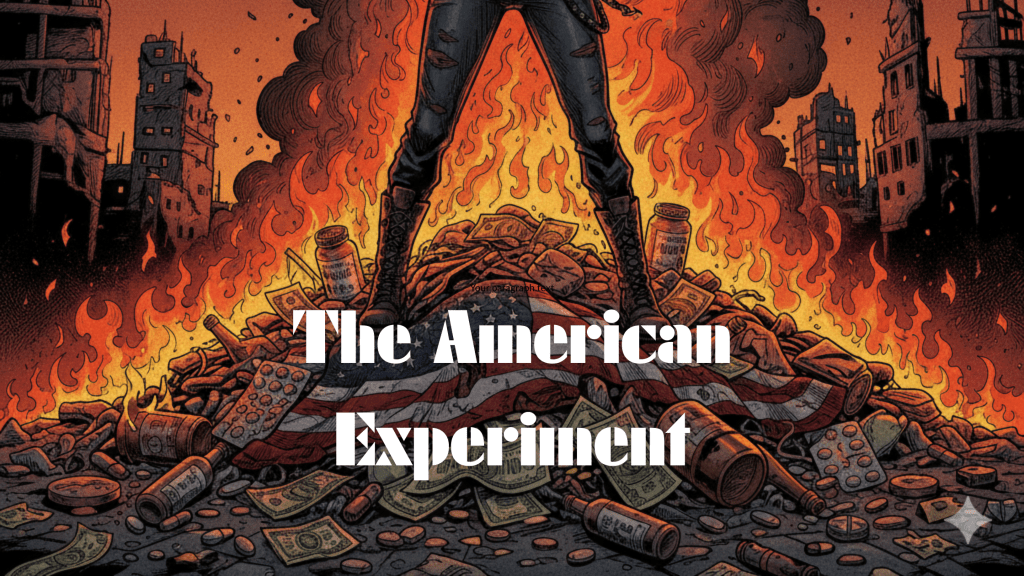
The Sound of “Survival Mode”
“I know I need my own money to be separate. I can’t depend on any man for money.”
— C, from the Labor Pains Oral History Collection
This is what survival mode sounds like. It’s the edge in C’s voice when she says that line—steady, proud, and exhausted all at once. For so many women I’ve interviewed through Labor Pains, survival mode is not a temporary state; it’s a way of life. It’s the constant calculation of what bill can slide this week, which meal can stretch, and who can watch the kids when the shift runs late. It’s a permanent cognitive scarcity—every ounce of mental and emotional energy consumed by immediate, high-stakes problems: rent, food, childcare, safety.
This is a normal state of existence for most of the women I interviewed in the Capital District Region. They came from different tax brackets, education levels, and yet spoke of the same feeling of constant survival mode.
When R&B artist and actress Teyana Taylor was asked if she’d ever not been in survival mode, she laughed and said, “As a Black woman, that is all but impossible.” Not because we don’t want to live differently, but because the world doesn’t allow us to do anything other than survive.
So I keep asking myself: Is “survival mode” an individual failing? A tragic inevitability?
I had no idea how to approach these questions, or the topic of economics, in my narrative literature review that I hope to publish as part of the Labor Pains project. I found my answers in one of my current reads…
The answer is neither. Survival mode for Black American women is a manufactured political and economic condition—an intentional design. And I posit that the primary tool used to enforce it is what economist Stephanie Kelton calls The Deficit Myth.
The Myth of the “National Checkbook”
The myth begins with a simple story we’re all taught: the government must live within its means, just like a household. We’re told the U.S. government needs to “find the money” through taxes before it can spend, that it can “run out of money,” or that it must “tighten its belt” when times are tough.
But Kelton’s work reveals what few people are willing to say out loud: this is false. The United States issues the U.S. dollar—it cannot “run out” of the dollars it creates, any more than a basketball scorekeeper can run out of points. You and I use dollars; the federal government creates them.
The purpose of this myth is psychological. It cultivates a sense of artificial scarcity. It makes us believe that there isn’t enough to go around, that any public investment—childcare, healthcare, housing—must come at someone else’s expense. It keeps us asking the conversation-stopping question: “But how will we pay for it?”
And right now, that scarcity story is colliding with reality. The federal government is literally shut down. The private markets we were told could do better—childcare, healthcare, housing—have failed spectacularly. This summer, federal employment reports quietly disappeared after being “corrected” to hide the fact that the private sector was not only failing to hire but actively letting people go. The pot isn’t empty. It’s being hoarded. And the myth makes us fight over scraps.
Then comes the second layer: “Taxes fund government spending.”
Again, not true. The government spends dollars into existence first, and taxes later remove some of those dollars from circulation. Taxes serve other purposes—to create demand for the currency, manage inflation, and redistribute wealth—but they do not “fund” spending.
This false story creates a moral hierarchy between the so-called “makers” and “takers.” The myth tells us there are good citizens—taxpayers—and burdens—those who rely on public goods. This division is not accidental. It’s how economic policy becomes moral policing.
The Exponential Tax on Black Women
One woman in my Labor Pains project oral history collection shared how she used public assistance to earn her bachelor’s degree, despite her family’s pressure to just “get off the system.” The support she received—gas vouchers, food stamps, childcare—wasn’t a crutch. It was a bridge. She used it to work part-time, study full-time, and graduate. She left assistance the day she earned her degree.
But the “makers vs. takers” narrative never makes room for stories like hers. It frames Black women—often caregivers, community builders, and low-wage workers—as the nation’s primary “drain.” It ignores how deeply they subsidize everyone else’s comfort.
Black women in America bear what I call the Exponential Tax:
- Tax 1: Financial. We pay a higher percentage of our income in sales, payroll, and rent-based property taxes than nearly anyone else, while holding almost no generational wealth.
- Tax 2: Invisible Labor. Our underpaid and unpaid care work—raising children, caring for elders, keeping communities alive—creates trillions in hidden value for the rest of the economy. This is an extracted labor tax.
- Tax 3: Cognitive. Living in permanent survival mode drains mental bandwidth, time, and health. This is the cost of navigating scarcity that should not exist.
And then the myth blames us for being tired.
The Human Cost: The “Theft of Futurity”
Let me be more explicit: when politicians say, “We can’t afford it,” that is not an economic statement. It is a policy of control. It’s the moral and political justification for withholding the very resources—living wages, universal childcare, student debt relief, affordable housing—that would allow Black women to exit survival mode.
Survival mode is not just about money. It is about time. It is about possibility. It is the theft of futurity—the ability to plan beyond the next 24 hours, to dream, to build, to rest, to heal.
The deficit myth is the weapon that keeps this exhaustion in place. The system depends on a class of people who are too busy surviving to organize for something better.
Black women have always fought back, but we are rarely believed. Our exhaustion is treated as normal, our resilience as infinite. Only now—when more Americans are realizing that their government does not intend to take care of them either—are our fears and strategies finally being echoed by others.
The Current Crisis: Inflation as the Great “Revealer”
Inflation has made the system’s cruelty impossible to ignore. Even six-figure earners are feeling the pinch of “survival mode.” The emperor has no clothes, and everyone can see it.
Two so-called “cures” are on offer.
Cure #1: The Conventional Solution—Demand Destruction.
This is the Federal Reserve’s approach: raise interest rates, slow the economy, and increase unemployment. Translation: intentionally throw people—especially low-wage Black women—out of work to “cool” prices. Survival mode becomes official policy.
Cure #2: The Kelton/MMT Solution—Targeted Fiscal Policy.
Use the government’s actual tools—spending and taxes—to address root causes. Tax corporate greedflation with a windfall profits tax. Invest directly in supply, especially the care economy: childcare, healthcare, eldercare. If people can afford to work and care, the economy expands without inflation.
So why does every politician insist we can only do Cure #1? Because the deficit myth blocks Cure #2.
“We can’t afford to invest in childcare right now—it’ll add to the deficit,” they say.
But look at New Mexico. Beginning November 1, 2025, the state will launch universal childcare funded by tax revenue—on the very same day millions of Americans face skyrocketing health insurance premiums. Unlike the federal government, states do have to collect taxes to fund programs. And yet, New Mexico is doing it. They are making the moral and fiscal choice to invest in people.
The myth forces us to sacrifice Black women first, and then applaud ourselves for our fiscal discipline.
From “Labor Pains” to Productive Power
The deficit myth is not just bad economics—it’s a weaponized narrative. It’s the story that makes the theft of Black women’s futurity seem responsible, even patriotic.
When I weave together the Labor Pains oral histories with Kelton’s Modern Monetary Theory framework, a clearer truth emerges:
The undervalued labor of Black women is not a “drain” on a limited pot. It is the single largest untapped productive resource in the U.S. economy.
Investing in this labor is not a cost—it’s the only sustainable path to shared prosperity. The real deficit is not in our budget. It’s in our imagination, our morality, and our failure to value the labor of Black women.
That is the labor pain I’m documenting: not just the ache of survival, but the contraction before a new world is born.


Leave a comment