Maps Tell Stories Data Cannot
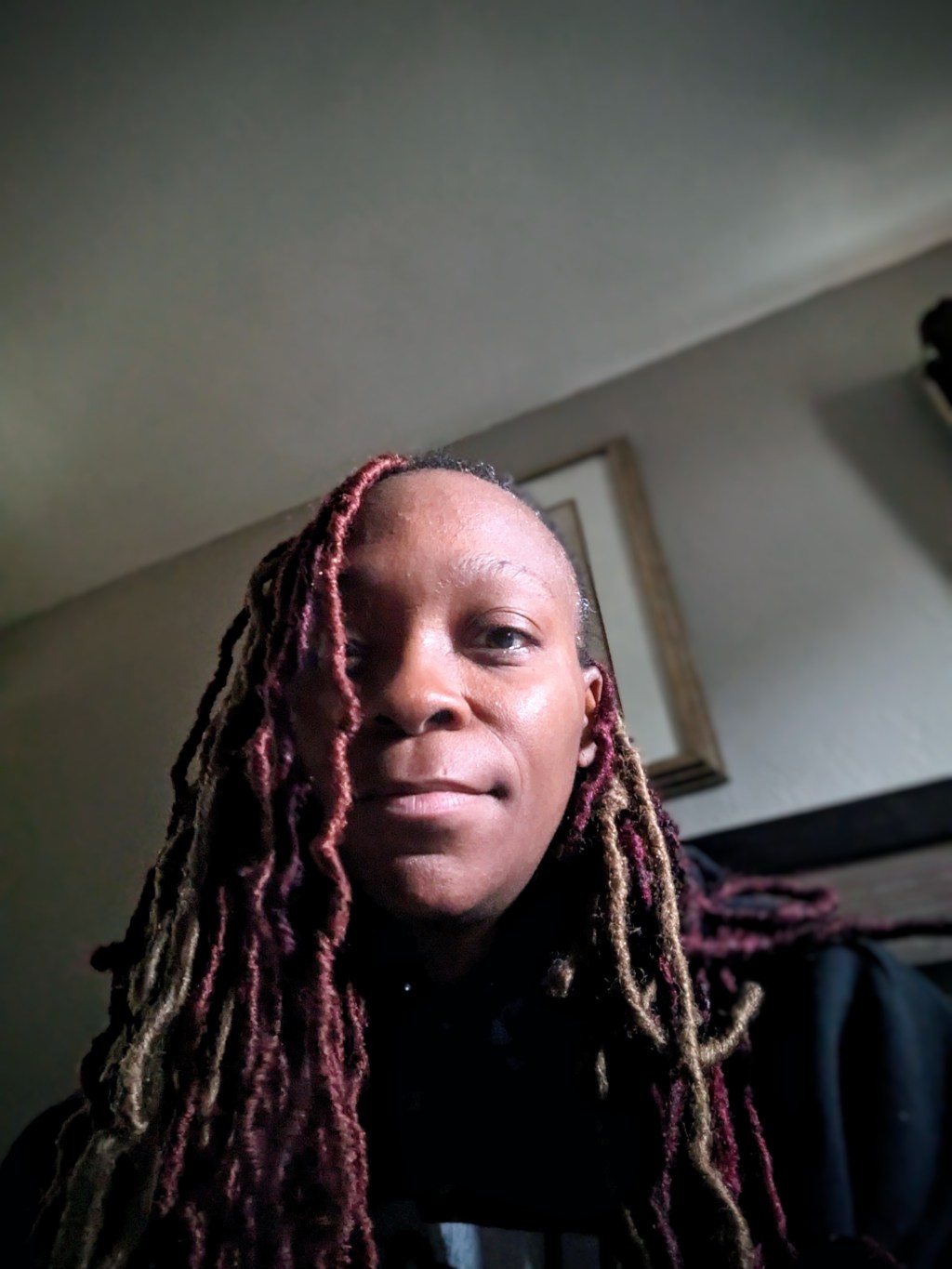
I fit in several statistics, and my family can be broken down in some interesting ways. I have been a solo mom of multiple children, an experience I share with many others; data from the Pew Research Center shows that nearly a third of all solo mothers have two or more kids. Today, I am the other adult in a blended family, a structure that the Pew Research Center notes is home to about 16% of all children in the U.S. Our family is beautifully complex: we have four children total, and my partner and I each have a child from a previous relationship. Each of our ex-partners also has children with other people. This dynamic, which the CDC identifies as “multi-partner fertility,” is more common than people realize, impacting about 20% of mothers with multiple children.
I could go on. What’s important is that I fit into enough statistical groups to be drowned by data. If I let that data define my identity, then I would surely die. I’d suffocate within the nexus of social and cultural constructs designed to make me experience life as inferior. Or at the very least, othered.
This tension between external labels and internal truths is at the heart of my oral history project, Labor Pains. We are consistently categorized and counted, but the true texture of our lives and our work—paid, unpaid, emotional, and physical—often goes unrecorded.
Our bodies, however, keep a different kind of score. Our bodies carry the weight of every identity we take on, translating the abstract pressure of a label into the physical reality of a tightened jaw, a knotted stomach, or a weary ache in the lower back. We are more than the sum of our demographics. We are a living archive, and our skin, muscles, and bones hold the true stories that data can never tell.
This became powerfully clear during an interview. I was speaking with a woman who shared that she was always expected to perform a significant amount of unpaid household labor. It was never discussed; it was simply the expectation. Her brother’s time, on the other hand, was his own; hers was communal property. Through our conversation, she realized for the first time that whenever she was with her family, she held a deep, persistent tension in her shoulders. It was the physical manifestation of that unspoken expectation. To her, she suddenly understood, embodying freedom meant having a relaxed posture. It meant letting her shoulders drop.
How many of us carry these invisible burdens? Body Mapping is one tool we use in this project to explore that question. It allows us to take hold of what labels could be and form them around what we know them to be, turning the silent, felt sense of our lives into a tangible story. It doesn’t erase the data, but it refuses to drown in it.
Which brings me to the ancestors. If this is how we map the stories of our own bodies, how do we do the same for women who are no longer with us? How do we make their past present? How do we feel the weight and the dreams of a woman who lived a century ago?
My answer is to bring her into the room with us, using the same principles. It starts with her silhouette.
My plan for the historical figures in Myth & Marrow is to project a life-sized image of each woman, tracing her form onto a unique surface. I’m currently imagining large, custom-cut mirrors, each shaped into the specific stance or pose of a historical figure. As you, the viewer, approach the piece, you will see your own reflection contained within her outline. In that moment, the past looks back at you. It’s an invitation to see the shared humanity, to recognize that her legacy lives within the space we now occupy.
But the story doesn’t end with the reflection. The surface of the mirror will be my canvas. On it, I will map two sides of her existence:
- One side will represent her external reality: My artistic interpretation of her public body, the labor she performed, and how she was perceived by the world—built from a collage of symbols, slogans, and words.
- The other side will honor her internal world: This is where I’ll attempt to map her dreams. How did she imagine freedom? What did liberation feel like in her body? This side will be an interpretation of her hopes and desires.
This entire artistic interpretation is grounded in countless hours spent deep in the archives. Every decision is informed by sifting through biographies, autobiographies, personal essays by women like Dr. Alice Green, newspaper clippings, club minutes from organizations like the Phyllis Wheatley Club, and official reports. (Yes, this is my version of a wild Friday night). It’s the only way to ensure these maps remember these women not as flat historical footnotes, but as complex beings of labor and of light.
Just as Body Mapping gives us a tool to reclaim our own narratives from the crushing weight of data, these mirror maps are my way of doing the same for the women who came before us—honoring not just the work they did, but the freedom they dreamed of in their own bodies.
Join the Fight for Our Stories
This work of seeing, of mapping, and of listening feels more urgent today than ever before. Last month, while the national jobs report was off by hundreds of thousands and this economy continued to suck the air out of the room for most of us, 319,000 Black women lost their income.
Read that again. The unemployment rate for Black women is at an alarming level, and while we are losing ground, white men have actually experienced gains in the employment sector. This is the data that threatens to drown us.
This project, this work, is a direct response. It is an opportunity to offset that inequity, both locally here in Oakland and Albany, and nationally in the narrative we tell about ourselves.
I am doing this work in our community with our neighbors, friends, and loved ones, searching for the stories that will ensure America heads into its next quarter-century with a more honest reflection of the values she has purported to have for generations.
Supporting Labor Pains does not just support me, a Black woman trying to pull this off at what is either the worst or the best possible time in American history, depending on your vantage point. It supports the literal millions of Black women with stories all of America needs to hear. It doesn’t solve everything, but it gets us talking about the right things.
Join this fight for our national values, our shared humanity, and the legacy we want the seventh generation to learn about in the years to come.


Leave a comment