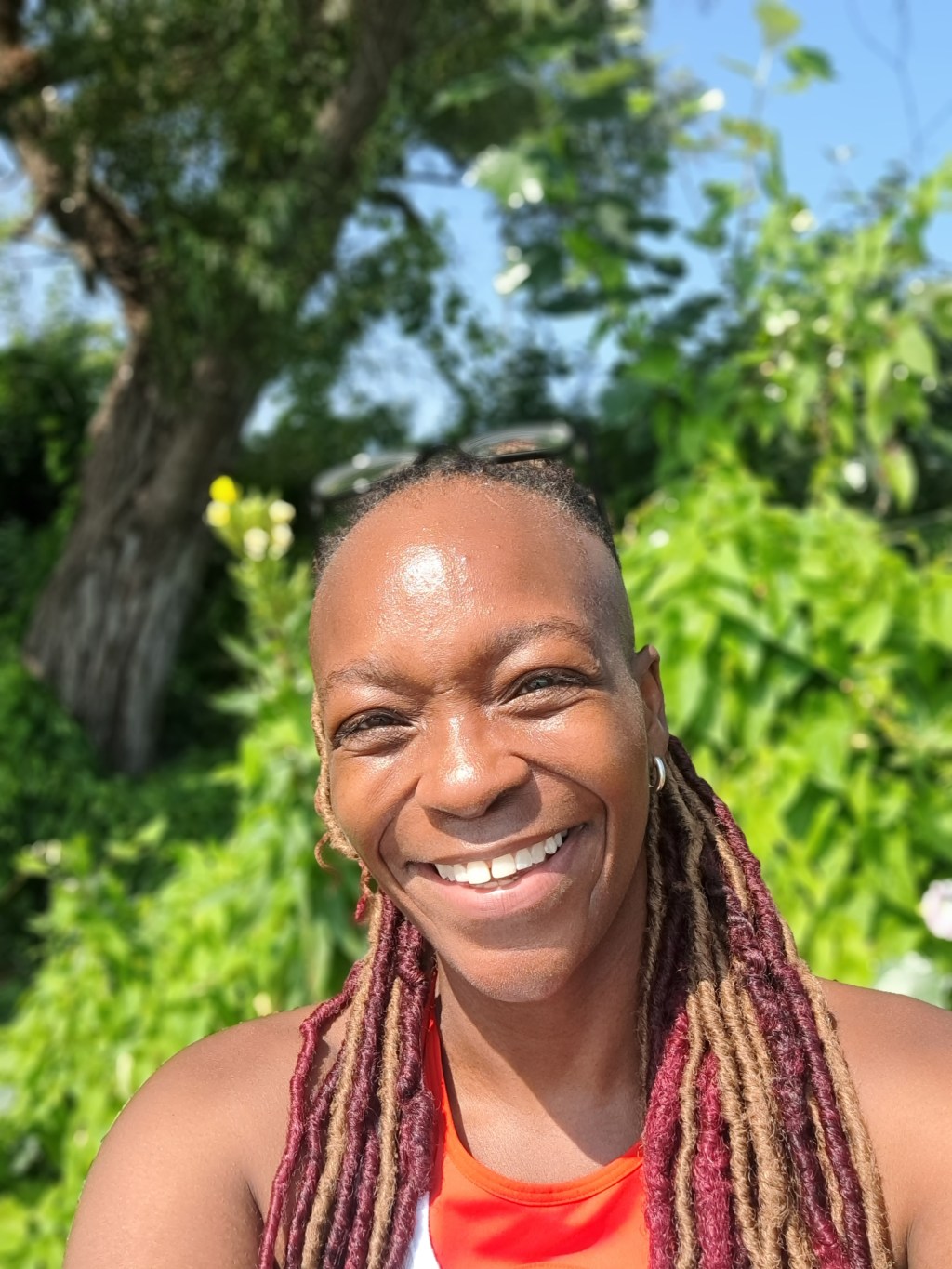
It’s LABOR DAY‼️ So it only feels right that we talk about the unique labor of being a Black woman. No, not that kind—though we can get into that later. I’m talking about the daily, exhausting, and often invisible calculus of survival, ambition, and community care that defines our lives.
I’m talking about the women who planned the cookouts, prepped the sides, and will be the last ones cleaning up tonight. The ones laboring today so our loved ones can rest. This isn’t just a holiday routine; it’s a perfect snapshot of a system that runs on the unseen, uncompensated labor of Black women. When you are constantly expected to work while others rest, you learn that the official rules for success don’t apply to you. This reality raises a critical question: What happens to a moral compass when the system holding the map is rigged against you?
I got a masterclass on this during a recent interview for the Labor Pains project. I was sitting here in Oakland with a brilliant Black woman from San Francisco, and she laid out a whole economic reality I’d only understood in theory. She spoke of “boosters” who source goods outside the formal economy and the neighborhood ingenuity of “getting a cable hookup from the crackhead”.
She looked at me and explained, “The moral compass in the hood is different”. It wasn’t about being wrong, but about surviving in a world that broke its promises first. For her, breaking the rules wasn’t a hustle; it was a “declaration of independence,” an act of agency in a system that banked on her failure. Her story is the heart of Labor Pains—capturing the unseen work and strategic brilliance it takes to build a life on your own terms.
Now, her story isn’t a one-off. It’s the lived experience behind some truly wild statistics. When we see that Black women experience the longest average duration of unemployment of any group, it hits different. Why? Because nearly 70% of Black mothers are the primary breadwinners for their families. We’re not just bringing home the bacon; we’re buying it, frying it up, paying the gas bill for the stove, and making sure everyone else eats first.
And about that bacon? The USDA predicts pork prices will increase by 1.6 percent in 2025. That’s not all: beef and veal are set to jump a staggering 9.9 percent, poultry by 2.5 percent, and even nonalcoholic beverages by 3.6 percent. The math ain’t mathing, especially when a KFF survey shows 59% of us are already worrying “a lot” about the cost of groceries.
This brings us to the Black Woman’s Optimism Gap: the Grand Canyon-sized space between our current economic reality and our unwavering belief that we will make it work. A Pew Research poll found that while 68% of Black women currently don’t have enough income, a 58% majority are confident they will in the future.
This Optimism Gap is where our magic is forged. It’s the fertile ground where necessity forces us to plant seeds of ingenuity, birthing the businesses, side hustles, and creative ventures that keep our communities afloat. This is where the entrepreneurship born from our struggle ends up defining and driving mainstream culture. And isn’t that the classic American two-step? They love Black girl culture but actively ignore the struggles of Black women. They want our rhythm, but they can’t handle our blues.
This is exactly why we must tell our own stories. The mission of Labor Pains is to archive these complex truths. This work is a labor of love, but love doesn’t pay for the gas to get to these interviews, the transcription services, or the technology to preserve these voices for the future. If this story moved you, please consider making a contribution to our GoFundMe today. Every dollar helps us honor the unseen labor of Black women and ensure our truths are not forgotten.
Thank you for being a part of this essential work.


Leave a comment