I have a confession to make: I have a love-hate relationship with economics.
It’s a confession because what logical person creates a passion project on something they have a love-hate relationship with. The answer: a Sagittarius.
The “love” —the spark—came from an unexpected place. It was my economics teacher’s son, in my senior year of high school, who came in as a guest speaker. He didn’t talk about supply and demand or marginal utility. He did a lesson on the sociology of education. He mapped out how the school system, by design, often sorts students into future roles: workers and managers.
At the time, I was a Black girl on the AP/Honors track. In my school district that meant I’d been taking advanced classes since middle school. Most of my classmates in my high school classes were from the more affluent neighborhoods in the city. I was one of four Black students in my graduating class that was on this track. I was experiencing the strange push-and-pull of being grouped with the “managers” from more affluent backgrounds in real time, his words gave language to a reality I felt in my bones.
It was a revelation. It’s what set me on the path to becoming a history teacher. I wanted to be in that system to effect change for my community, and I believed teaching was going to be my vehicle. That lesson showed me how economic structures shape our lives before we even earn our first paycheck.
But the “hate” part? That was the actual economics course. So much so that I had to take it again in college, and I held it off until my very last semester. No matter how many times I read the textbook or the study guides, it just became Greek after a certain point. The concepts felt abstract, disconnected from the human stories I cared about.
Now, for this project, I can no longer keep economics at arm’s length. The economy is central to Labor Pains. It is the architecture within which Black women’s labor—and lives—are valued or devalued. My core argument, that Black women’s paid and unpaid labor subsidizes American capitalism, pins on my ability to articulate a coherent, relevant, and grounded understanding of the American economy and its godfather, Capitalism.
To do that, I have to get comfortable with the theory. And in doing so, I’ve realized that much of the political debate we hear is just people arguing from different economic playbooks without ever naming them. I want to share what I’m learning, so you can have a similar revelation and see where you might align.
Here’s a breakdown of four prevailing economic theories that shape our world.
Finding a Language for Our Economic Reality
- Classical Economics
- The Gist: This is the original playbook, championed by Adam Smith. It argues that free markets, left to their own devices, will regulate themselves through the “invisible hand” of supply and demand. The government’s role should be minimal—just protect property rights and enforce contracts. The market, in its view, is rational and will always return to full employment on its own.
- My Observations: This theory feels the most disconnected from the lived experiences at the center of Labor Pains. It completely ignores, and therefore devalues, all labor that happens outside of the formal market—child-rearing, elder care, domestic work—the very unpaid labor that allows the “formal” economy to function. It assumes an equal playing field that has never existed, overlooking the deep, structural realities of racism and sexism.
- Keynesian Economics
- The Gist: Developed by John Maynard Keynes during the Great Depression, this theory argues that the free market is inherently unstable and can get stuck in long periods of unemployment. The solution? Government intervention. During a downturn, the government should increase spending (even if it means running a deficit) to “prime the pump,” stimulate demand, and create jobs.
- My Observations: I appreciate that this theory acknowledges the need for a safety net and collective action. However, the critical question for me is: who benefits from that government spending? Historically, large-scale government projects and bailouts haven’t always prioritized the needs of Black communities or Black women. The “pump” gets primed, but the water doesn’t always flow to everyone.
- Monetarism
- The Gist: Popularized by Milton Friedman, this is a reaction against Keynesianism. Monetarists believe that the government’s primary role in the economy should be to control inflation by managing the money supply. They argue that government intervention often does more harm than good and that a slow, steady growth in the money supply is the key to economic stability.
- My Observations: The intense focus on controlling inflation often comes at the expense of social programs and achieving full employment. When budgets are cut to prevent inflation, the first things to go are often the social safety nets that are lifelines for the most vulnerable. (Remember that Big Beautiful Bill?) This framework seems to prioritize the stability of currency over the stability of people’s lives, a trade-off that disproportionately harms Black women.
- Modern Monetary Theory (MMT)
- The Gist: This is the newer theory on the block that challenges many of the core assumptions of the previous three. MMT argues that a government that issues its own currency (like the U.S.) can’t “run out of money” in the same way a household or business can. The real limit on government spending isn’t a deficit, but the availability of real resources (labor, materials) and the risk of causing inflation. Therefore, the government can afford to pay for major social investments, like a federal jobs guarantee, universal healthcare, or childcare. The question isn’t “How do we pay for it?” but “Do we have the people and resources to make it happen?”
- My Observations: This is the framework that I am leaning toward because it fundamentally reframes what is possible. It shifts the conversation from one of scarcity to one of priorities. The idea that we aren’t limited by federal deficits, but by our political will, is revolutionary. It provides a powerful economic language to argue that investments in care infrastructure—the very sectors where Black women’s labor is foundational—are not just affordable but essential for a healthy and just society. It aligns with the principle that our economy should serve people, not the other way around.
My journey with economics is far from over. In fact, it feels like it’s just beginning. I am looking forward to diving into Stephanie Kelton‘s book, The Deficit Myth, to gain a better understanding of the economic theory heating the debates.
But this exploration isn’t just about theory; it’s about recognizing a lived reality with a long, powerful history. This pattern of Black women building systems of care and economic opportunity in the face of systemic neglect is deeply embedded in our history. We don’t have to look far to see it.
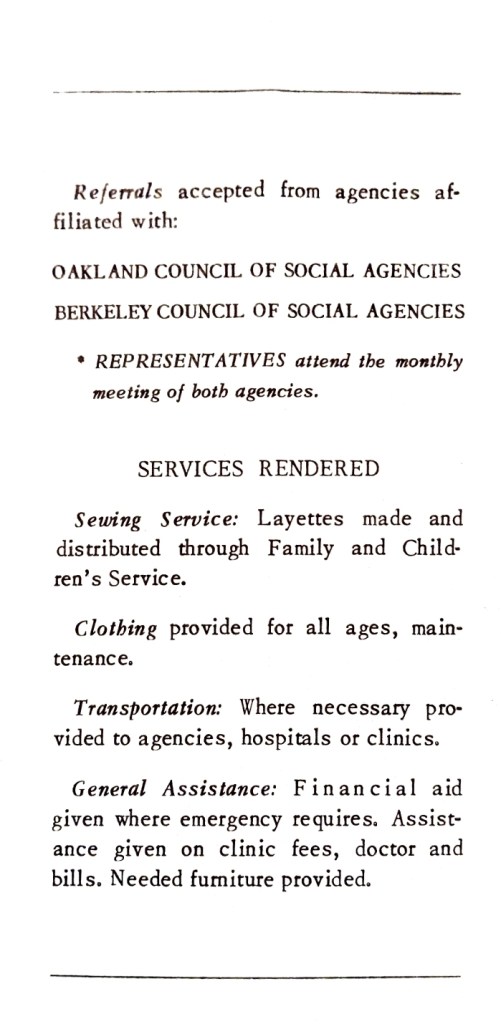
I keep coming back to the Phyllis Wheatley Club of the East Bay. During the Great Depression, long before the New Deal offered any semblance of a federal safety net, these women were the safety net. They organized relief for the hungry, provided housing for young women moving to the city for work, and raised funds to support their community’s most basic needs. They were quite literally doing what the government would not. Even when New Deal programs were eventually pushed through, they were often administered in ways that discriminated against Black families, making the work of clubs like the Phyllis Wheatley Club all the more vital. They built their own economic infrastructure when the national one failed them.
This legacy of creating opportunity out of crisis is not a relic of the past. We saw its modern iteration in the wake of another devastating economic collapse: the Great Recession of 2008.
That crisis disproportionately impacted Black wealth and employment. Yet, in its aftermath, something remarkable happened. Black women became the fastest-growing demographic of entrepreneurs in the country. Facing job loss, systemic barriers in the corporate world, and a system that failed to support them, they did what their foremothers had always done: they built their own tables. This surge in entrepreneurship wasn’t just a career choice; it was an act of economic self-preservation and community-building, creating services, products, and opportunities that directly addressed their needs.
From the mutual aid of the Phyllis Wheatley Club in the 1930s to the entrepreneurial boom of the 2010s, the story is strikingly consistent. When the dominant economic structure fails or refuses to provide, Black women organize, innovate, and build. Their labor, whether in the home, the community, or the marketplace, creates the essential scaffolding that supports everyone else.
I’m sharing this part of my process because Labor Pains isn’t just about telling stories; it’s about building a shared understanding of these systems. It’s about finding the right tools and the right language to advocate for a world where all this essential labor is finally seen, valued, and justly compensated.


Leave a comment