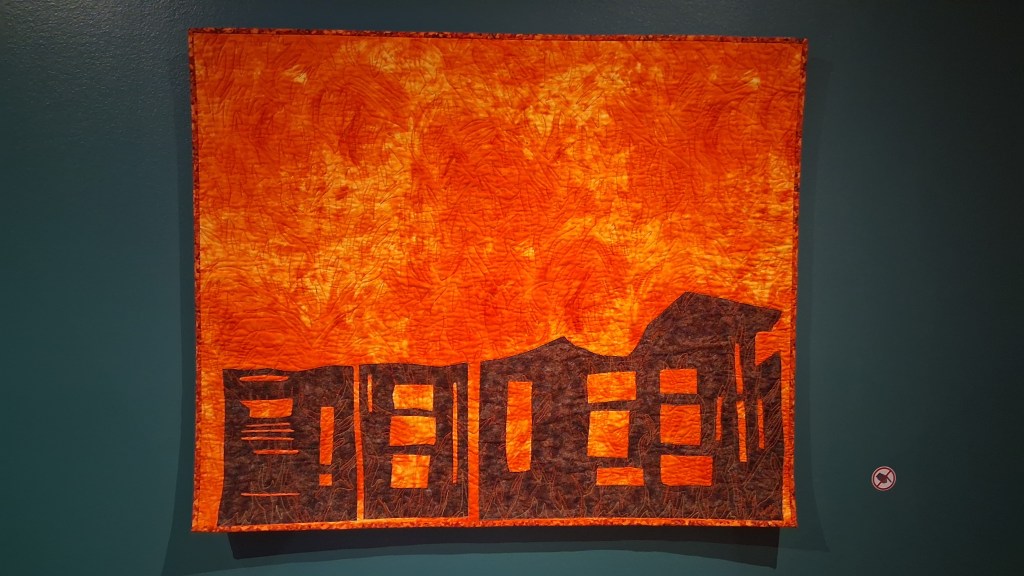
Marion Coleman, is a celebrated Bay Area textile artist whose work is featured in the “Black Spaces: Reclaim & Remain” exhibit at the Oakland Museum of California (OMCA). She was a 2018 National Heritage Fellow, and her work often tells stories of African American history, social justice, and community.
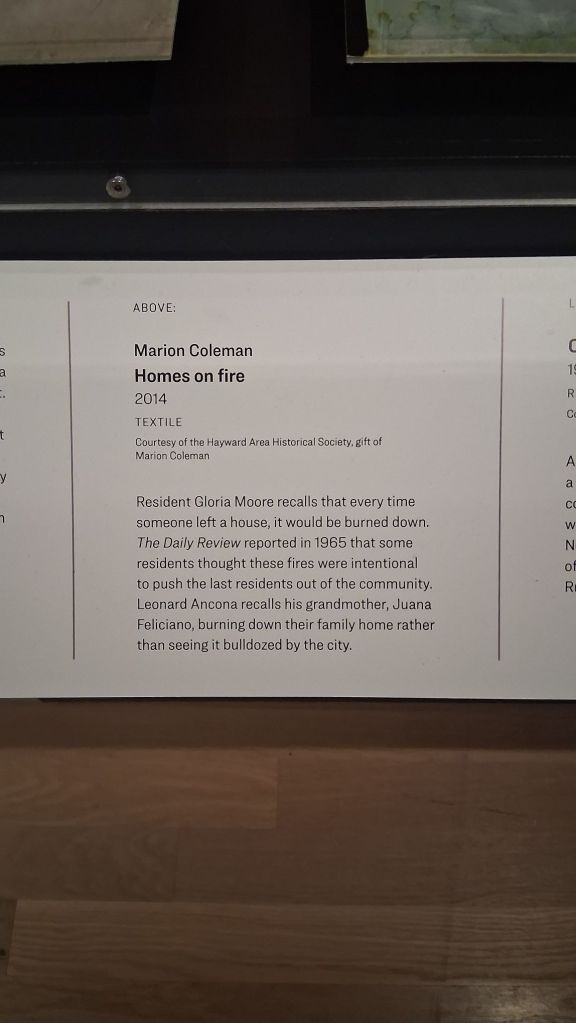
This week, I went to see the “Black Spaces: Reclaim & Remain” exhibit at the Oakland Museum of California. I found myself rooted to the spot in front of a quilt by the late Bay Area textile artist, Marion Coleman. Staring at the intricate patterns and textures, I wasn’t just seeing cloth and thread; I was seeing a story about labor, legacy, and a cultural intelligence that feels just out of reach for so many of us today.
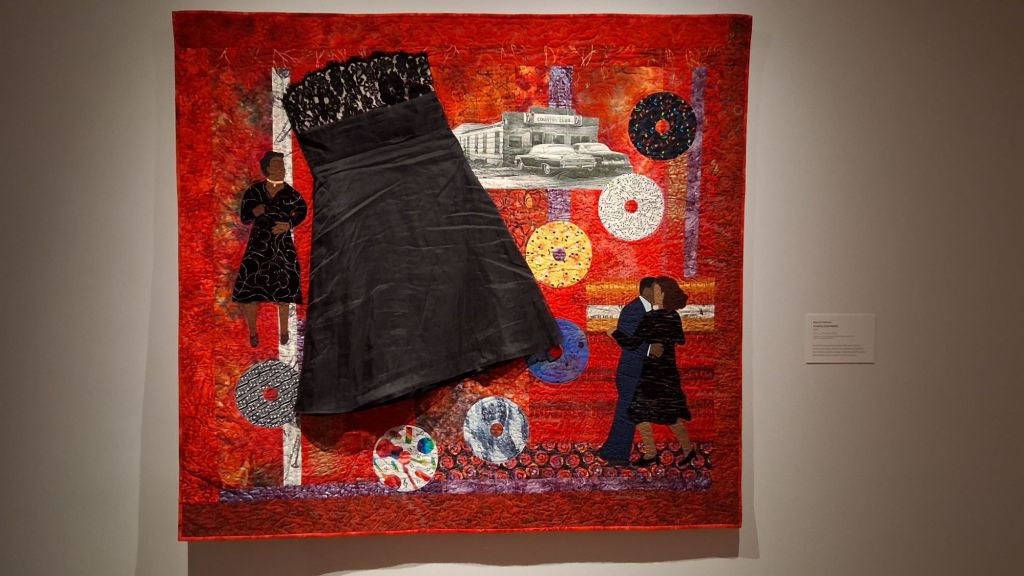
Coleman’s work got me thinking about the significance of quilting for Black women. It was a craft born from necessity but elevated to an art form—a way to document family history, build community, and create beauty and warmth from scraps. It was a tangible record of our labor.
So where did that connection go?
As our people moved from the rural South to urban centers, we were chasing survival and opportunity. But that migration came with a silent cost. In the effort to prove ourselves “educated” and “civilized” in the eyes of a hostile society, we were pressured to shed our folkloric traditions. We traded cultural practices like quilting and farming for industrial labor and assimilation. We learned to read their books, but we forgot how to read the stories in the stitches.
I see this history not as a failure, but as a painful transaction made under duress. Now, I feel a shift.
It is no surprise to me that as Black women collectively reject the toxic conditions of white supremacy, we find ourselves getting deeply curious about these very traditions. We are looking for the threads that connect us to the grandmothers we never knew. We are drawn to the wisdom held in the earth and in our hands. This return is not about nostalgia; it’s an act of reclamation and healing.
This is the exact curiosity I am trying to capture in my script for Myth & Marrow. The story of Black women’s labor is not just about the jobs we’ve held, but about the knowledge we’ve carried and the cultural work we’ve performed. Seeing Marion Coleman’s art reminds me that our ancestors left us a roadmap. We just have to learn how to read it again.
This work of remembering is at the heart of the Labor Pains project. The histories embedded in these quilts are the same kinds of stories we seek to archive in our Map & Meets.
- Share Your Story: Do you have a story about a craft passed down—or lost—in your family? We are building an oral history of Black women’s labor, and your experience is vital. Come share it at our next event.
- Support the Work: Preserving these stories and transforming them into performance is our labor. Help us continue this work by becoming a supporter.
- Follow the Journey: To get more behind-the-scenes updates as we build this project from the ground up, subscribe to our newsletter. Link in the Website menu!


Leave a comment