With Labor Day just around the corner, the air is thick with chatter about the economy, job reports, and unemployment rates. But the story being told on the national stage feels… incomplete. The narrative I hear is that Black women are losing their jobs—victims of DEI rollbacks or a supposed unwillingness to work. My experience, and the experience of so many brilliant Black women I know, tells a different story.
We aren’t being let go. We’re letting go. We are walking away. This isn’t about giving up. It’s about choosing ourselves.
F*ck This Job & The Dream It Promised
Let’s be real. Many of us are resigning from environments that are no longer emotionally, mentally, or psychologically serving us, even if they pay the bills. There’s a generational shift happening. We’re realizing we’d rather navigate the uncertainty of a tight budget than spend 40+ hours a week in a soul-crushing, unsafe workplace.
Choosing to leave a “stable” job is designed to feel terrifying. That fear is a feature, not a bug, of a patriarchal system that thrives when we believe our only option is dependency. So when a Black woman decides to walk away, it’s not just a career change.
It’s a revolutionary act of resistance.
But after we walk away, what do we walk toward? An act of revolution requires a blueprint for what comes next. Following my own resignation, I poured my energy into Labor Pains, asking this very question. How do we build a new world when we’re still dismantling the old one? The research has been a lifeline, and this week, it didn’t just give me an answer—it gave me a framework.
The Blueprint: Artist, Architect, Archivist
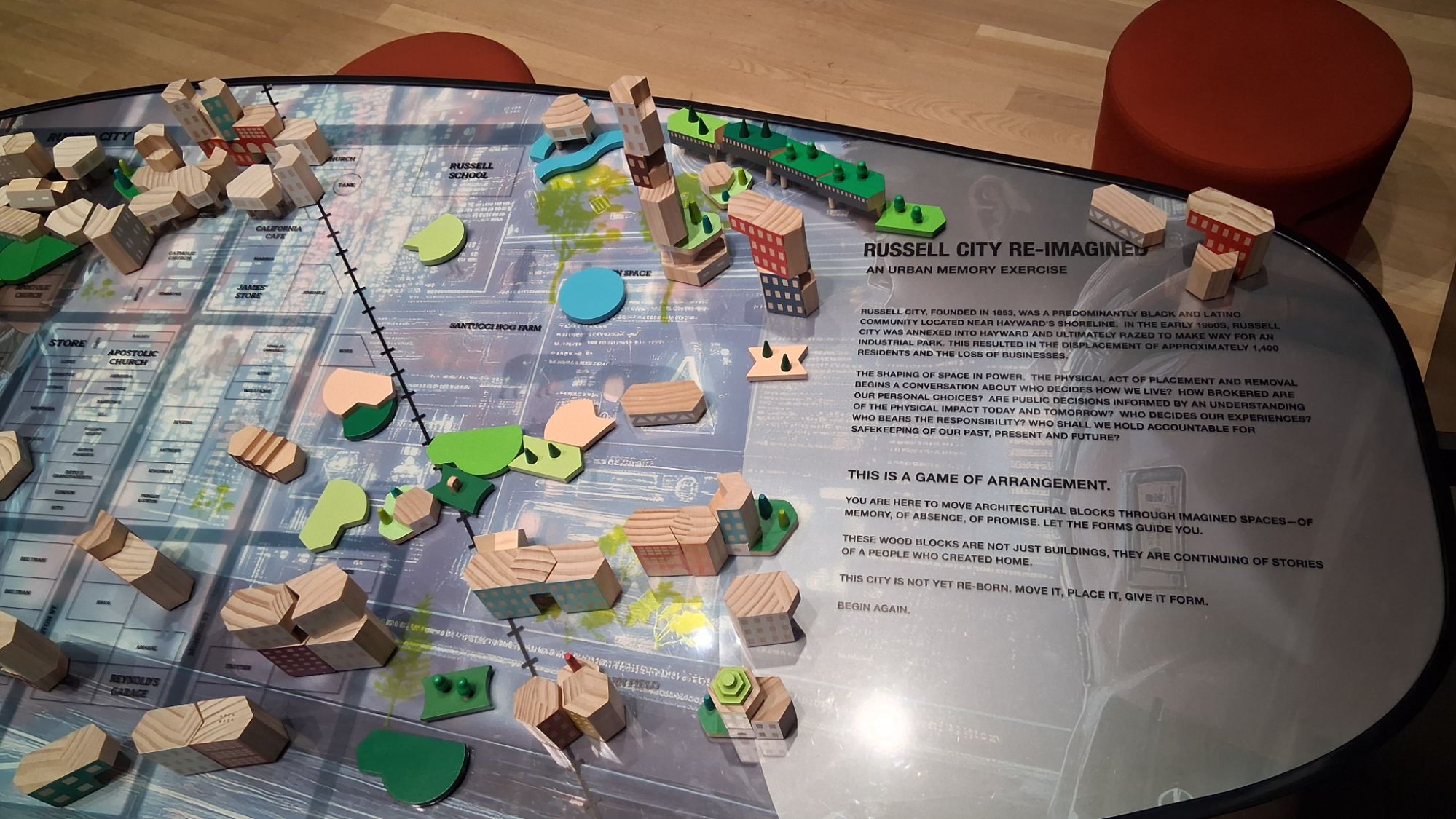
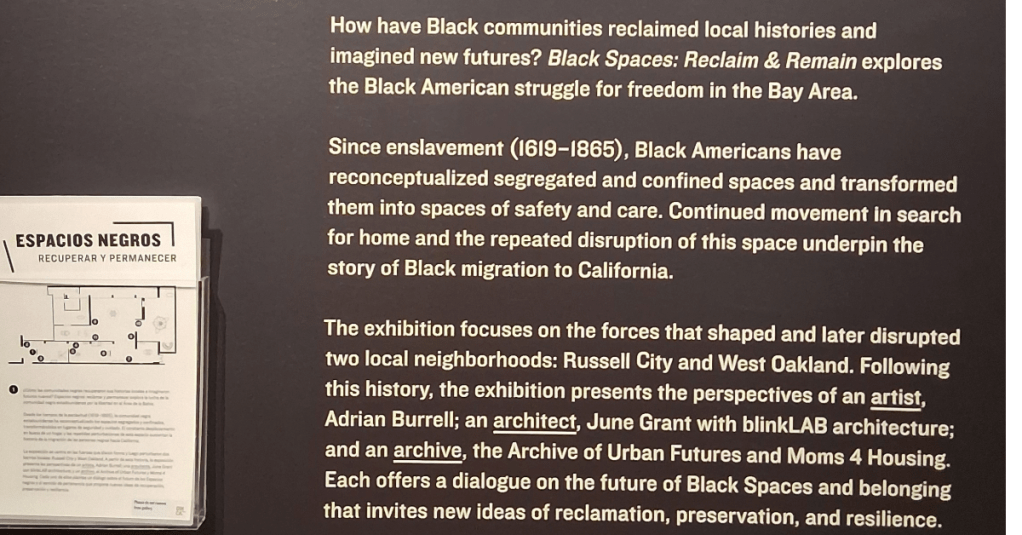
The revelation came at the Oakland Museum of California’s BLACK SPACES: RECLAIM, REMAIN exhibit, a profound exploration of displacement, redlining, and community in West Oakland and Russell City. I was struck by its collaborative structure, which examines Black space through three distinct and vital perspectives:
- The Archivists: Moms 4 Housing and the Archive of Urban Futures, who ground the story in historical fact and lived reality, preserving the evidence of our struggles and triumphs.
- The Artist: Adrian Burrell, who captures the soul of the experience, translating data and history into human emotion and connection.
- The Architect: June Grant, who provides the blueprint for the future.
During a talk, Grant shared that her firm’s shortest project is currently fourteen years old—a powerful lesson in endurance. The redlining mural in Grant’s section of the exhibit, contrasting current green space inequities with Afrofuturist visions of Oakland, is a tangible act of imagining the world we deserve.The exhibit crystallized a core belief for me: To build a new world, we must simultaneously be the Archivist of our truth, the Artist of our present, and the Architect of our future.
Building the Next 250 Years, Together
This is the blueprint for Labor Pains. My personal revolution led me to a collective one. As the United States approaches its 250th anniversary in 2026, we are at a critical juncture. The first American mythos was written without us. For the next 250 years, we must be the authors.
The goal of Labor Pains is to collect 150 oral histories from Black women, placing our modern experiences of labor alongside historical research that stretches back to the American Revolution.
This is not just an act of correcting the record; it is an act of creation. Each of the 150 narratives we collect is a foundational document for the next American story. It is:
- An archival act of preservation.
- An artistic act of storytelling.
- An architectural act of world-building.
We are creating the primary source documents from which future generations will learn about our ingenuity, our resistance, and our vision. Your story, your choice, your labor—it all matters. It’s part of a history that we are writing for ourselves, right now.
You’ve got this. We’ve got this.


Leave a comment