American Creation Stories
You’ve likely seen them popping up on everything from websites to official documents: the crisp, new logos for America 250. They signal the start of what is planned to be a year-long celebration of this nation’s founding values. But what, exactly, are those values?
When I taught American History in the South Bronx, the first chapter of our textbooks was inevitably titled “American Values.” It would list words like liberty, equality, and opportunity as the foundational pillars of our nation. But I saw then what has become painfully clear to so many now: these are not foundational values so much as they are foundational myths. American liberty, American equality, and American opportunity have always meant radically different things for different people, because they have always been defined and constrained by American capitalism.
The Two 1776s
It’s no coincidence that as we prepare to celebrate 250 years since the Declaration of Independence was signed in 1776, we are also marking the 250th anniversary of Adam Smith’s The Wealth of Nations, also published in 1776.
The American experiment has never been just an experiment in democracy; it has always been an experiment in capitalism.
For generations, we have chosen to believe the myths, perpetuating a story that secured our own small place in the patriarchy with the desperate hope that we, too, might one day break through and be one of the special ones.
This promise—that you can win if you just work hard enough—is itself a cornerstone of American folklore. Take the legend of John Henry, the “steel-driving man.” He was a Black man who, in a contest of man versus machine, worked himself to death to beat a steam-powered drill. He wins the race, only to die with his hammer in his hand. He is mythologized as the ultimate symbol of the American work ethic, a hero of indomitable will.
But the myth focuses only on the man and his public labor. There are no famous songs or widely told stories about the wife and children he left behind. The irony is staggering: in a story about the devastating human cost of industrial capitalism, the very people who bore the deepest, most lasting costs of his sacrifice—his family, his community—are rendered invisible. Their labor of grief, survival, and single-parenting is erased from the tale.
This is precisely why the Labor Pains project uses folklore as a framework. These myths, from John Henry to the bootstraps narrative, are not just stories; they are the cultural software of American capitalism. They teach us who to value, whose labor is worth celebrating, and whose is meant to be silent, unseen, and uncompensated. Through collecting the oral histories of Black women’s labor experiences, we aim to unearth the stories often left out of the dominant narratives, adding crucial layers to our understanding of American culture and capitalism.
Another Ominous Anniversary
Our culture, built on such stories, can no longer sustain an economy built on such brutal extraction. The words we’ve used to cover it up no longer work. This is our reckoning. This is the painful, turbulent, and necessary process of a nation-state beginning to mature. We must finally face what we do to each other in order to accept what we have done.
This moment feels like a category five hurricane, a force of nature that is here to strip away the flimsy structures and reveal the truth of what lies beneath. This very month marks the 20th anniversary of Hurricane Katrina, a storm that devastated one of the nation’s oldest and most culturally significant cities. Katrina did more than flood New Orleans; it laid bare the brutal inequalities that our national myths were designed to obscure, showing the world who is considered disposable when the waters rise.
Those of us with faith may see signs in these converging anniversaries and events. I admit, none of this feels coincidental to me. Others may simply see a series of unfortunate events. But either way, we have all felt the ominous shift in the air. As news reports track the path of Hurricane Erin, that feeling becomes more acute.
Whether it is a storm of wind and water or a storm of social and economic crisis, the winds are rising. We can no longer pretend we don’t see the sky changing. The storm is here.
Artists at the Crossroads
This instability is not confined to economic indicators or environmental anxieties. We see it reflected in the growing fragility of the arts world. Here in the Bay Area, the Berkeley theater scene is reeling from recent closures. San Francisco feels like a tinderbox of economic and social pressures. Oakland, while deeply committed to its artistic communities, struggles with chronic underfunding. And across the country, in places like the Capital Region of New York, the arts community is on edge, facing similar challenges.
From bustling metropolises to quiet small towns, artists are not immune to the relentless forces of capitalism. Yet, the need for art—to help us process, to connect, to critique, to prevent further deterioration, and ultimately, to heal—has never been greater. Ironically, at a time when art is so vital, it is being systematically undermined, often at the highest levels of government, a chilling echo of authoritarian regimes that seek to suppress creativity and dissent.
Staking our Claim
We value art in America. It’s time we prove it to ourselves. If you are not currently supporting an individual artist or an arts organization, I strongly encourage you to start. For the cost of skipping fast food once or twice a month, you can directly support the services, programs, and creative projects that are actively working to change our communities for the better.
To get you started, here are a few of the incredible artists whose work I follow in the communities where Labor Pains is active:
- In Albany, NY: I’m constantly inspired by the powerful poet D. Colin and the innovative writer Director choreographer Hettie Barnhill., both of whom are incredible Black women shaping the creative landscape of the Capital Region.
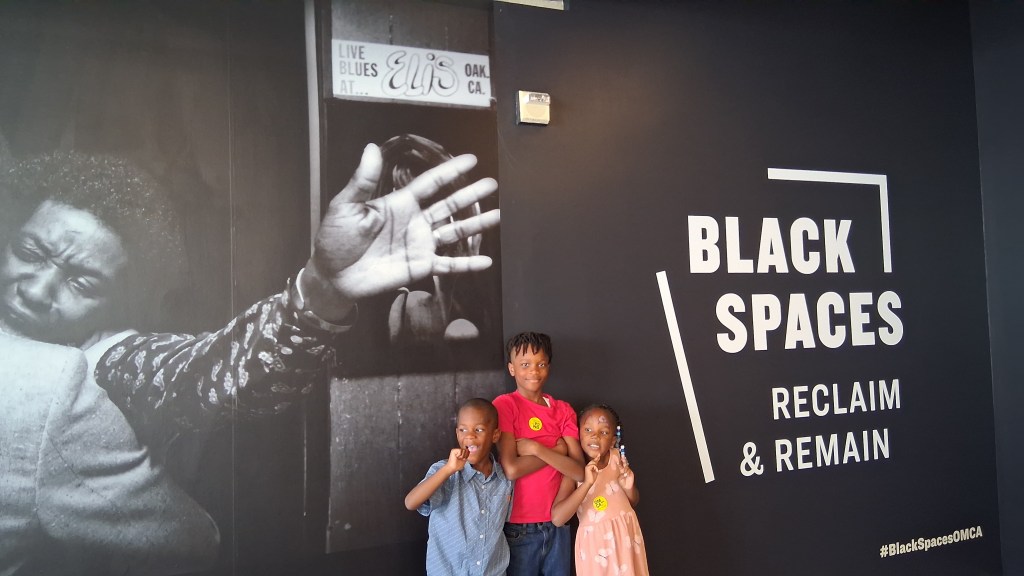
- In Oakland, CA: I’m a huge fan of architect June Grant, whose work is rooted in visionary Afro-futurism, and the brilliant textilist Marie Coulman. You can see pieces from both artists right now in the Black Spaces: Reclaim, Remain exhibit at the Oakland Museum of California (OMCA).
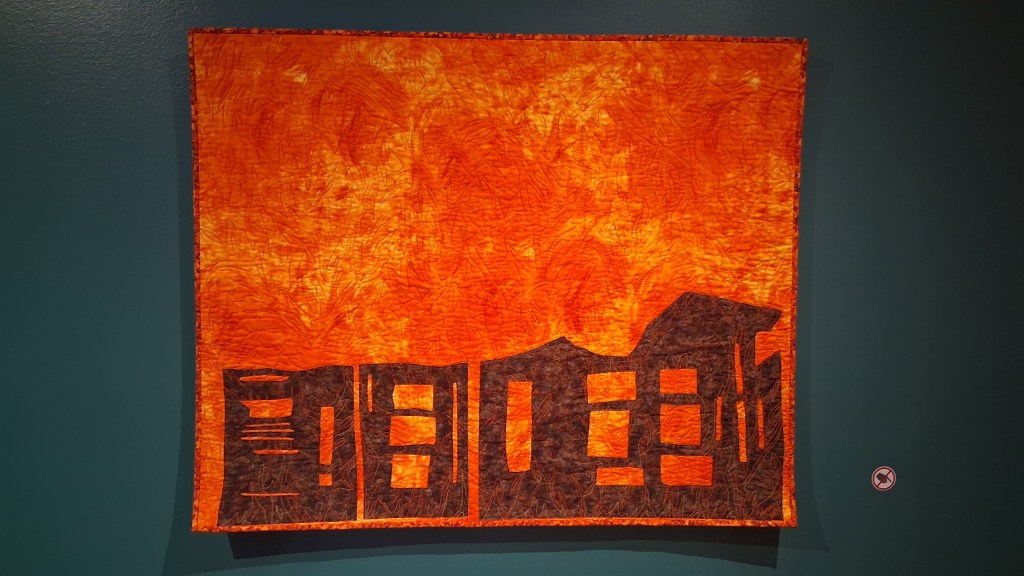
These are just a few examples of the immense talent in our communities. These are the spaces where our stories are told, where critical conversations happen, where healing begins. As the storm rages around us, let us not forget the vital work of the artists who help us make sense of the world and imagine a better one. Support the arts. Our collective well-being depends on it.


Leave a comment