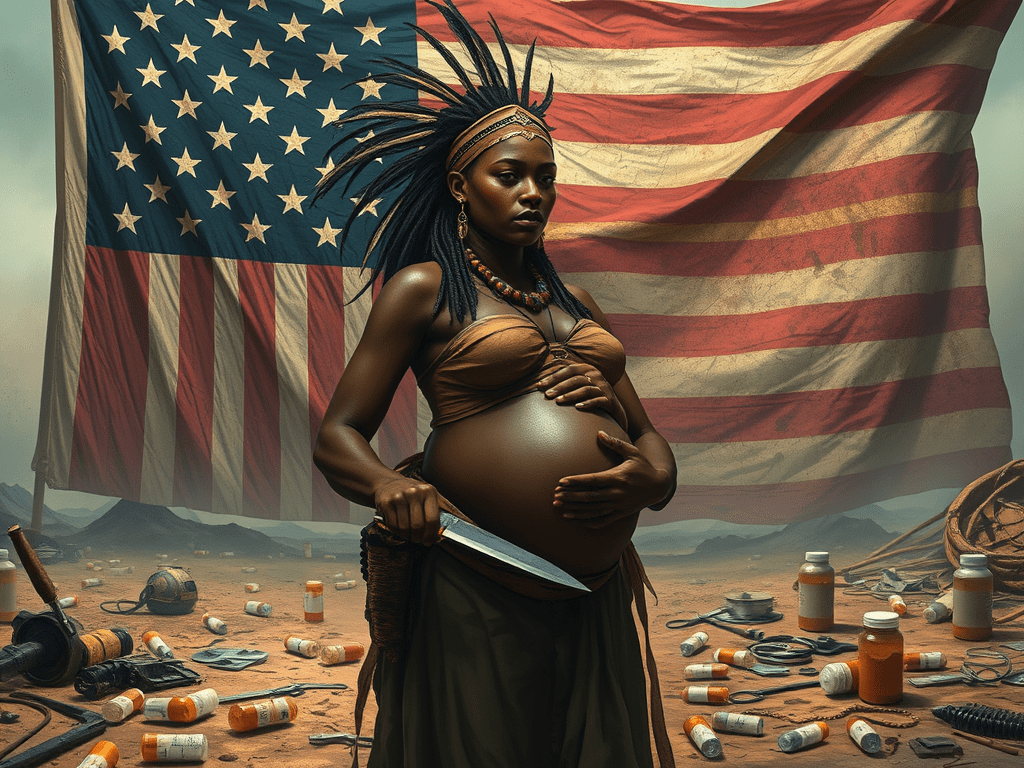
Adriana Smith, Labor Pains, and the Path to Healing
The recent segment on NPR’s “It’s Been a Minute” podcast, exploring fetal personhood in the wake of Adriana Smith and her son Chance’s birth, brings into sharp focus a disturbing contemporary parallel to the story of Henrietta Lacks. In 2025, as white science and law laud their “achievements,” a real child and a real family are left to grapple with the profound mental, emotional, physical, and financial aftermath. Adriana Smith’s ordeal is a glaring, present-day example of precisely why artistic initiatives like the Labor Pains project are not just beneficial, but absolutely necessary—both in their process and their product.
The Urgency of Labor Pains: Healing Invisible Wounds
The Labor Pains project is a groundbreaking initiative designed to address the deep-seated trauma inflicted upon Black women by historical and ongoing systemic inequities in white science, law, and capitalism.
This project is unique because its process is specifically crafted to foster healing within Black women, recognizing their distinct experiences and burdens. While its primary focus is on Black women, the universality of healing from systemic harm means its benefits will extend to any marginalized group. More than just a therapeutic process, Labor Pains lays the foundation for a vital social practice, creating a space for collective healing and the reclamation of narratives.
As humans sharing the same global community, we have a profound responsibility to heal, both privately and publicly. The “In My Skin” workshops, which form the core of Labor Pains’ healing process, are desperately needed spaces for community-based recovery. Equally crucial is the project’s product: the powerful presentation of gathered information, the sharing of silenced stories, and the resonant singing of ancestral songs. This dual approach—healing in community and amplifying voices—is what makes Labor Pains a truly transformative endeavor.
Researching Black Women: Why Traditional Methods Fall Short
When we endeavor to understand the experiences of Black women, particularly concerning health, we frequently encounter a significant hurdle: conventional research methodologies often fail to genuinely capture and represent their voices. For far too long, scientific inquiry has been shaped by perspectives that inadvertently reinforce existing power imbalances, leading to a “false universalism” that overlooks diverse cultural understandings. This is a critical issue because, as many scholars and activists contend, a failure to critically examine social structures and hierarchical practices in research constitutes a major impediment to achieving equitable health outcomes. Fundamentally, if the very tools we employ to understand health are rooted in systems that have historically marginalized Black women, how can we possibly expect to gather information that authentically reflects their realities?
The Innovation: Body Mapping as a Tool for Healing and Storytelling
This is precisely where innovative, arts-based approaches like Body Mapping become indispensable. Imagine a research method that deliberately minimizes power imbalances between the researcher and the participant, thereby facilitating a more culturally and context-sensitive exchange of information. Body Mapping offers exactly this. It represents a significant departure from purely verbal methods, which are often complicated by linguistic differences and varying interpretations of words across cultures and regions.
By making visible alternative and often silenced health experiences, these methods provide a counter-hegemonic perspective, allowing us to delve into the nuanced lived realities that traditional, more rigid scientific frameworks might miss or even distort. In the pursuit of justice and health equity for Black women, embracing such decolonizing research tools is not merely beneficial; it is essential.
In a therapeutic context, body mapping offers a unique and powerful approach to understanding and processing personal experiences.
It’s a creative method that empowers individuals to visually and symbolically represent their bodily sensations, emotions, and narratives on an outline of a human body. This technique transcends traditional interviews by providing access to deeper aspects of a person’s experience that might be challenging to articulate verbally.
Through body mapping, participants can reclaim or construct a preferred view of their body, potentially shifting perceptions or narratives surrounding physical and emotional experiences. Moreover, engaging in body mapping activities has been shown to empower individuals to more openly discuss their stories and emotions, fostering a sense of embodiment and facilitating a deeper connection to their lived experiences.
The Stark Reality: Health Disparities and the Need for Embodied Healing
It is crucial to recognize that Black women in the United States bear a disproportionate burden of health disparities, carrying a unique and often unacknowledged weight of trauma—in mind, body, and spirit—that frequently goes unaddressed for years. This persistent trauma, stemming from historical and ongoing systemic inequities, contributes to significantly higher mortality rates from preventable and manageable conditions. Therefore, spaces and experiences like body mapping, which facilitate emotional expression and embodied healing, are not just beneficial, but profoundly necessary for Black women.
Consider the stark realities highlighted by agencies like the CDC and NIH:
- Maternal Mortality: Black women in the U.S. face a severe crisis. The CDC reported that in 2023, the maternal mortality rate for Black women was 50.3 deaths per 100,000 live births, which is more than three times higher than the rate for White women (14.5 per 100,000). This disparity persists regardless of education or socioeconomic status.
- Cardiovascular Disease: The American Heart Association notes that over 50,000 Black women die each year from cardiovascular disease.
- Overall Life Expectancy: Black women generally have shorter life expectancies compared to White women in the U.S.
- Chronic Conditions: Black women are disproportionately burdened by chronic conditions such as hypertension, obesity, and diabetes, which contribute to higher rates of morbidity and mortality. For instance, Black women have a significantly higher prevalence of hypertension (nearly 40%) compared to White women (around 25%).
- Cancer: Black women die from breast cancer at a 40% higher rate than White women.
- HIV: In 2018, Black women accounted for 11% of new HIV diagnoses among adult and adolescent women in the U.S., despite being a smaller percentage of the overall female population.
While precise, universally comparable statistics from global organizations like the WHO and UN are challenging for direct comparisons of Black women in the U.S. versus other Black women globally (due to varying data collection methods and definitions), the U.S. maternal mortality rate for Black women stands out, even when compared to some lower-income countries. Many developed nations have significantly lower maternal mortality rates overall, and the racial disparities seen in the U.S. are often less pronounced or non-existent in countries with more equitable healthcare systems. This suggests that systemic issues within the U.S. healthcare system, including implicit bias and limited access to quality care, play a significant role in these outcomes.
The impact of intergenerational trauma on Black women’s health is also a critical factor. Experiences of racism, discrimination, and systemic oppression are passed down through generations, manifesting in various ways, including chronic stress, higher rates of mental health conditions like PTSD and depression, and a general distrust of healthcare systems. These factors contribute to the “strong Black woman” narrative, which, while fostering resilience, can also lead to self-silencing and the suppression of distress, further impacting health outcomes.
In essence, for Black women, engaging with therapeutic spaces that allow for body mapping offers a vital avenue for addressing the profound and often invisible weight of historical and contemporary trauma. By providing a medium to embody and express their experiences, these spaces can empower Black women to heal, advocate for their own well-being, and ultimately, dismantle the health disparities that tragically shorten their lives.
Moving to Phase II
The journey to healing is deeply personal, yet profoundly communal. As I continue to uplift the voices and experiences of Black women, I am filled with immense hope for the transformative power of initiatives like Labor Pains.
On a personal note, I’m thrilled to share that I’ve begun the process of patenting this unique methodology. This step is a direct reflection of my growing understanding of the immense value of this work, and a commitment to ensuring Black women are more protective of their intellectual property in general. It’s a crucial move to safeguard the innovation and impact of what we’re building.
Next week, I’ll be flying back East, continuing the important work of expanding the reach of Labor Pains. And as we grow, I’ve also launched my individual donor campaign, inviting those who resonate with this mission to contribute and help us bring these vital healing spaces to more communities.
This work is more than just a project; it’s a movement towards collective liberation and well-being. I invite you to be a part of it. If you’re ready to engage in a process of profound healing and contribute to a powerful social practice, I strongly encourage you to register for an upcoming “In My Skin” workshop. Your story, your healing, and your voice are invaluable.


Leave a comment