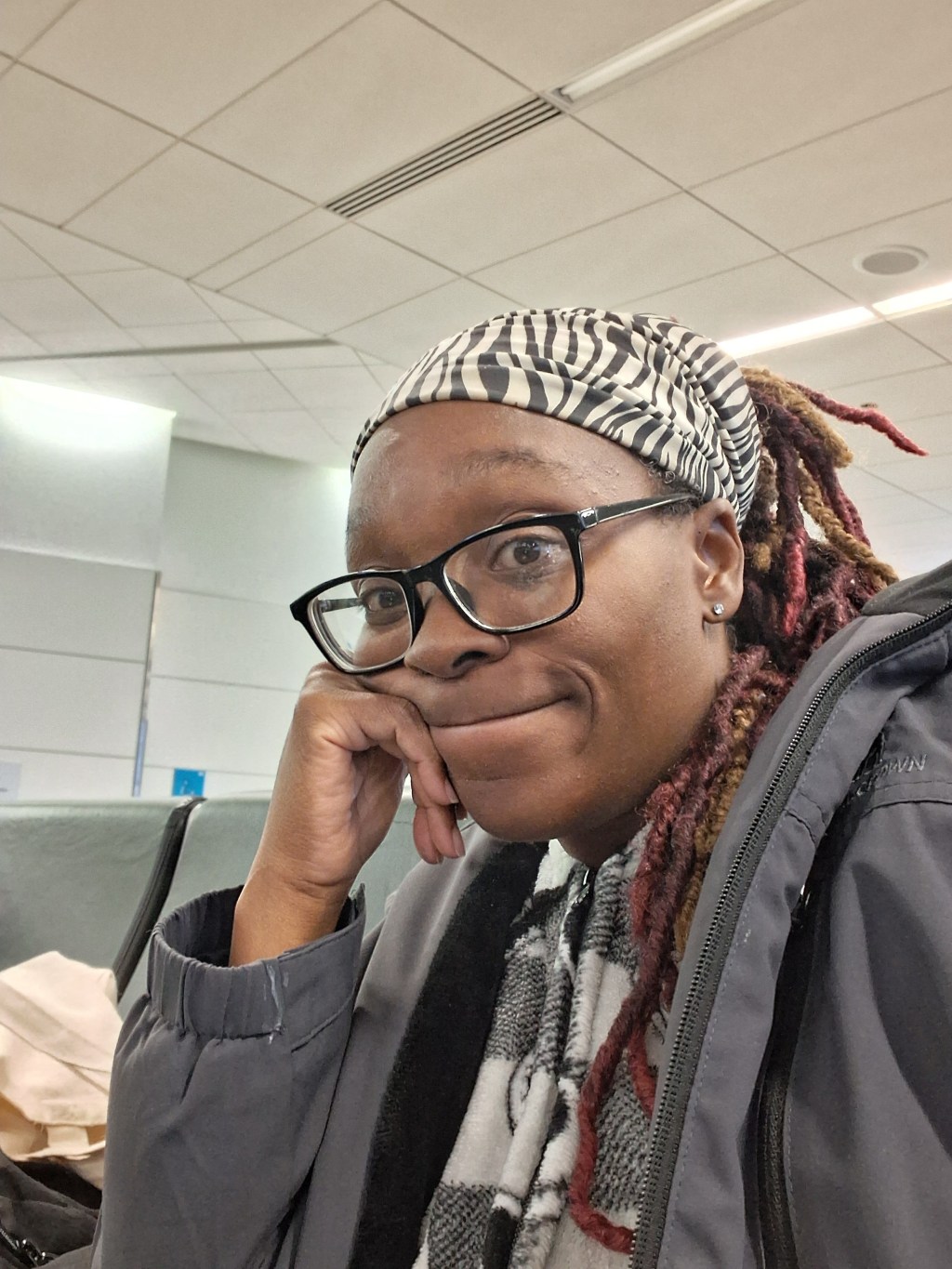
I participated in my first TikTok Live yesterday. It’s not the sort of thing I’d ever think I’d be doing, but my use of the platform has increased dramatically these past few months as I’ve integrated promoting my blog into my social media routine.
I have a love-hate relationship with the internet. It is a treasure trove of information, constantly being updated and fact-checked. It is also a spiral into absurdity and all that is wrong with humanity. It all depends on the moment.
And right now, we are in a moment. A hella big moment.
A sitting U.S. Senator was manhandled to the floor yesterday for asking the head of DHS a question. The media is calling Los Angeles a “riot zone” to justify sending armed forces—the National Guard and the Marines—into an American city. The governors of California and New York are in open conflict with the Executive Branch and its legislative loyalists. The fact that I am using the word “loyalists” on the eve of the 250th anniversary of the Declaration of Independence shatters my understanding of American government, despite having been an American history teacher.
This isn’t just heavy; it’s horrifying. The four courses I took on world war keep bubbling to the forefront of my brain. There is no doubt in my mind that this is a government takeover. Some days, I am afraid that this is it—that we will never come back from this, that we will become a regime by the end of the year. (A huge thank you to everyone who voted for the economy. Great work, y’all.)
Other days, I’m hopeful. That hope usually comes from being around Black people. We’ve survived 400 years here; we will survive this. There is active work being done.
Hence, being on TikTok Live. The conversation was about whether Black and Brown solidarity can exist without the Latinx community addressing its own anti-Blackness. It was a great discussion because it gets to the heart of the matter: media, culture, and the government will have us believe in division to perpetuate the capitalist machine. If we all collectively stopped buying things, it would hurt the billionaires in power. I swear the U.S. Dollar should say, “In Power We Trust,” because it certainly isn’t God. As Dr. Ruth Wilson Gilmore tells us, there is no “good capitalism.” There just isn’t.
Black culture has always understood this, so Black people have always moved differently. Forced to create our own space because the white colonists who drowned their humanity in the Atlantic spoke of freedom while beating, raping, and economically exploiting Black bodies, Black people have always known that this nation’s ideals did not match its practices. We’ve always maneuvered to thrive.
But those who emigrate have a totally different experience. It’s varied and complex. Some are folded right into society, like the white South Africans now infiltrating our communities. Others face initial discrimination before becoming “model minorities.” And still others have to claw and fight just to prove they have a right to participate in the experiment called America.
Let us not forget that while this unfolds, Gaza is completely cut off from the entire world. American corporations continue to fund Israel’s genocide of Palestinians. Ms. Rachel is being canceled by mainstream white America for her undeniable support of life—the simple concept that life is life and deserves to be valued and protected, no matter where in the world it is.
The protests that started in LA have spread, and the country is bracing for Saturday’s “No Kings March.” We are actually here, living with a whiny, delusional, impotent King Louis XIV, while lawmakers plead with us to “stay peaceful.”
And once again, Black women are being called upon to save the very people who hurt us in November. It doesn’t matter that only 77 million people voted him in. They did, and this is where we are. Now that many Black women are keeping themselves away from the protests, our absence notable, some are asking, “Where’s the solidarity?”
That was the question on many Black women’s minds on November 8th of last year.
Most of us are now protecting our bodies, minds, and spirits by staying off the streets and doing things our way—much like every other culture has done to us since the inception of this country. But the expectation that Black women are emotional and physical mules for everyone else’s heavy loads is so embedded that people can actually form their mouths to ask such a stupid question about our absence. That a family can’t bury their daughter, Adriana Smith, because the state wants her body to carry a pregnancy to term for research, shows us she is becoming the Henrietta Lacks of our age. The fact that most of White America still don’t know the names of these two women speaks to level of disregard for Black Female bodies and life.
November was a clear indication to every Black woman in this country of exactly what this country thinks of us. That hurtful, collective epiphany activated a profound change within our community. Since then, so many Black women in the upper generations—Gen X, Boomer, the Silent Generation—have begun to reimagine themselves and what they want for the rest of their lives. I hypothesized that many of us simply stopped trying to meet the impossible demands of American and Black culture after we were devastated. Why work so hard to please people who would literally rather have a convicted felon over you, simply because he’s a white man? Many of us decided to leave our white-oriented spaces—truth be told, we’ve been leaving since COVID—because what’s the point?
Capitalism isn’t based on having a great work ethic; it’s based on always having a lower, exploitable working class.
This internal realization is coming right up against the urgent need for external action. I can only speak for myself when I say I have struggled with this. What actions do I take, knowing that my very existence in any space as a Black woman automatically puts me at risk for emotional or physical assault and microaggressions? Folks just can’t seem to help themselves or their inherent biases.
Leaning into my work is my answer. The entire design of the Labor Pains project addresses these things. Black women need an exclusive space—for us and no one else—to process and heal, so that individually, we can each decide what to do with the fire before us.
That’s all we want. Autonomy.


Leave a comment