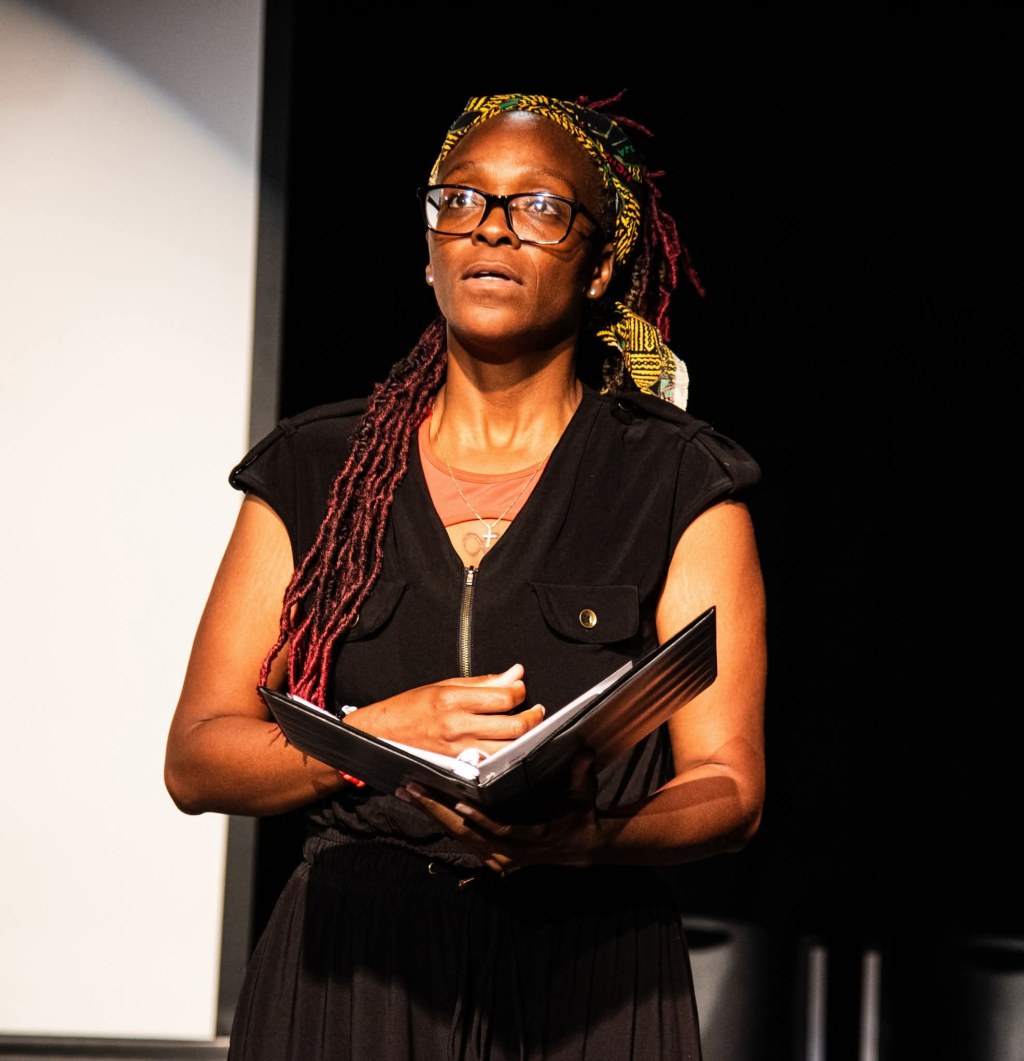
The Labor Pains project delves into the often-invisible costs borne by Black women navigating systems built on racial inequality. This week, I’ve been exploring the concept of respectability politics and how it disproportionately impacts Black women, particularly concerning their health and well-being.
Respectability politics is a term used to describe the pressure on marginalized groups to adopt behaviors and appearances that align with dominant societal norms, often as a survival strategy or a way to gain acceptance and avoid discrimination. While seemingly benign or even framed as “self-improvement,” this pressure comes at a significant cost. As Mikki Kendall writes, “respectability is financially and emotionally expensive” (Kendall, 2020, p. 90). It demands “a nonstop remodeling of body language, wardrobe, and hairstyles” (Kendall, 2020, p. 91), requiring constant vigilance and resources simply to be perceived as acceptable or worthy.

For Black women, this is often an inequitable burden. From hair care products and styling appointments to skincare, fragrances, and clothing choices, the expectation to maintain a certain aesthetic standard can be incredibly expensive.
Black Americans, predominantly women, represent a significant and growing force in the beauty industry. Spending by this group increased steadily from $6.6 billion in 2021 to $7.4 billion in 2022, reaching an estimated $9.4 billion in 2023, demonstrating a substantial investment in beauty and personal care.
Black female consumers are a major driving force behind hair care spending, with reports showing they spend significantly more on hair care products than other demographics. We also enjoy “smelling good”, so our imprint on the fragrance industry is deep and expansive.
Black girls are frequently conditioned from a young age to adhere to high beauty standards, framed under the guise of dignity and proper “self-care.” However, when the financial and emotional expenditure required is so significant, it can become a source of stress, debt, and self-criticism rather than genuine empowerment or self-care. Kendall points out that “Respectability politics are, at their core, an easy way to avoid engaging with history and current events” (2020, p. 91) – a distraction from the systemic issues that create the need for such strategies in the first place. We see a current example of this dynamic in the MAGA attacks on Rep. Jasmine Crockett, which often targets her appearance rather than engaging with her substantive critiques and demands for accountability from public officials.

This connects directly to the health disparities Black women face. The failure of Western healthcare to adequately serve Black women is starkly evident in horrifying statistics, such as the alarmingly high maternal mortality rate. Despite technological and medical advancements, Black mothers continue to face unacceptable risks, highlighting a systemic failure rooted in historical and ongoing inequities. As Gastaldo, Rivas-Quarneti, and Magalhães (2018) argue, “the failure to utilize research methodologies that critically examine social structures, hierarchical practices, and cultural understandings is the single greatest barrier we presently face in achieving better health.”
Western medicine, often seen as universally applicable, has repeatedly failed Black women because few health models are specifically built to support our holistic well-being. This suggests a fundamental issue with how knowledge is produced and applied within the dominant paradigm. Gastaldo et al. (2018) note that science itself “could be conceived as a project of capitalist, colonial, and patriarchal domination,” leading to the “false universalism of Western scientific endeavors.” In this system, the experiences and health needs of Black women are often rendered invisible or deemed disposable, a reality made clear every day in American healthcare.
Addressing this requires making visible what has been silenced. Gastaldo et al. (2018) advocate that “we should make visible alternative and counter-hegemonic perspectives by focusing on silenced health experiences.” This is where methodologies like Body Mapping become crucial. Our project, Labor Pains, utilizes the creative process of body mapping precisely for this purpose. It offers an innovative way to embody experiences and gather rich, pertinent details about the social, cultural, economic, religious, and other intangible forces that govern our lives and impact our health.
Traditional healthcare research often relies heavily on verbal methods like interviews and surveys. However, as Gastaldo et al. (2018) point out, language and linguistic differences across regions, cultures, and languages can create significant barriers in “data generation and analysis,” potentially distorting both the interpretation of questions and responses. Furthermore, data itself has a fraught history for the Black community, used since the nation’s inception within a political framework built on racial distinctions to support a capitalist economy reliant on free labor. Just as a pluralistic approach is needed in historical research to understand the true meaning and interpretation of laws (as discussed by Accomando in needing multiple consciousness), a similar approach is needed in scientific and health research.
By providing a non-verbal, creative outlet, Body Mapping bypasses some of these linguistic barriers and allows for a deeper, more nuanced expression of lived experience. It is through methods like Body Mapping that we can begin to develop proactive forms of healthcare that holistically center and care for Black women navigating the complexities of American capitalism. It’s a step towards research and care models that see Black women not as disposable, but as deserving of systems designed for their thriving.


Leave a comment